
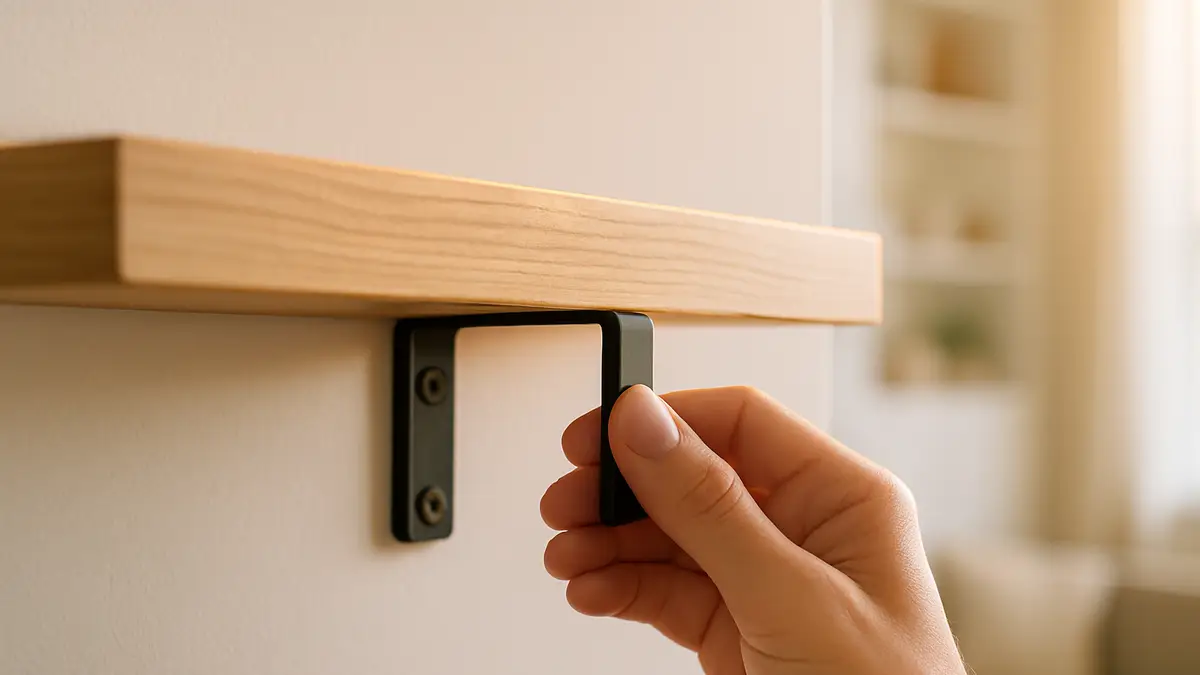
If you’re staring at an empty wall in your bedroom, hallway, or reading nook, the choice usually comes down to two options: floating shelves or built-in custom shelves. Floating shelves are lightweight, low-profile fixtures that mount directly to a wall with hidden brackets, making them ideal for display items and light everyday use. Built-in custom shelves are permanent, framed units designed and installed to match your room’s dimensions, offering far more strength and storage capacity. For most Philadelphia homes, the right pick depends on your wall type, how much weight you need to store, and whether you want a decorative accent or a long-term storage solution.
This guide breaks down both options in detail so you can make a confident, informed decision for your space.
What’s the Difference Between Floating and Built-In Shelves?
Floating shelves are individual boards attached to a wall using concealed brackets or cleats, so they appear to “float” without visible support. They’re typically installed in small groupings and work best in areas where you want an open, airy look — think a living room accent wall or a kitchen spice display.
Built-in custom shelves are constructed as part of the room itself. They’re framed, fitted to the wall from floor to ceiling (or within a defined alcove), and often finished with trim to match existing woodwork. Because they’re anchored into the wall studs across their full width, they can support significantly heavier loads and are far less likely to sag over time.
Floating Shelves: What Philly Homeowners Should Know
Floating shelves are a popular choice for smaller updates, and for good reason. Here’s what to weigh:
Advantages:
- Quick to install, often in a single afternoon
- Lower upfront cost than a full built-in system
- Creates a clean, minimalist look that suits modern and transitional interiors
- Easy to reposition or remove without major wall repair
- Works well for books, plants, framed photos, and decorative objects
Drawbacks:
- Limited weight capacity, especially on plaster walls common in older Philadelphia rowhomes
- Fewer configuration options since each shelf stands alone
- Not ideal for closets or rooms that need enclosed, dedicated storage
- Can look sparse if not styled thoughtfully
Built-In Custom Shelves: What Philly Homeowners Should Know
Built-ins take more planning, but many homeowners find the payoff worth it, particularly in older homes with irregular wall dimensions.
Advantages:
- Higher weight capacity, suited to heavy books, bins, or closet storage
- Custom-fitted to odd angles, sloped ceilings, or narrow alcoves common in Philly rowhomes and twins
- Adds resale value as a permanent home feature
- Can be designed with doors, drawers, or adjustable shelving for flexible use
- Blends seamlessly with existing trim and millwork
Drawbacks:
- Higher upfront investment
- Longer installation timeline, often several days depending on complexity
- Permanent, so it’s a bigger commitment than a set of floating shelves
- Requires more precise measuring and planning upfront
Floating vs. Built-In Shelves at a Glance
Factor | Floating Shelves | Built-In Custom Shelves |
Installation time | Hours | Days |
Weight capacity | Light to moderate | Moderate to heavy |
Cost | Lower | Higher |
Customization | Limited | Extensive |
Best for | Decor, small storage | Closets, libraries, media walls |
Permanence | Easily removed | Permanent fixture |
Which Shelving Style Fits Philadelphia’s Older Homes?
Philadelphia’s housing stock skews older than the national average, and that matters here. Many rowhomes and twins in neighborhoods throughout the city and surrounding Bucks County suburbs still have plaster-and-lath walls rather than modern drywall. Plaster can crack under stress from anchors that aren’t placed carefully, and it doesn’t always hold weight the way drywall over studs does.
This is where professional installation earns its keep. A licensed custom closet company can locate studs accurately, choose the right anchoring hardware for plaster or drywall, and design a shelving layout that respects your home’s existing character rather than fighting against it. Homeowners working with a custom closet company also get the benefit of a layout built around actual room measurements, rather than off-the-shelf sizing that may not fit a Philly rowhome’s narrower proportions.
Basements and closets in older homes also tend to run damp, especially during humid Pennsylvania summers. Solid, well-sealed wood closet shelving resists warping better than laminate or particleboard, which matters more in a built-in system meant to last for years than in a lightweight floating shelf you might swap out later.
If you’re comparing service providers, it helps to look at examples of finished work near you. Homeowners exploring custom closet shelves in Richboro can see how built-ins are adapted to fit sloped ceilings, narrow closets, and other quirks typical of Bucks County housing stock.
How to Decide: A Step-by-Step Approach
- Assess your wall type. Knock lightly on the wall — a solid thud usually means plaster, while a hollow sound suggests drywall. This affects which anchoring method will hold securely.
- Estimate your storage load. Light decor and paperbacks are fine for floating shelves. Heavy textbooks, bins, or closet items call for a built-in frame.
- Think about permanence. If you’re renting, planning to redecorate soon, or want flexibility, floating shelves make more sense. If you’re settled in your home long-term, a built-in adds lasting value.
- Set a realistic budget. Floating shelves cost less per project but built-ins typically deliver more usable storage per dollar over time.
- Get a professional assessment. A quick consultation can confirm which option suits your specific walls, room shape, and storage goals before you commit.
Cost Considerations for Philadelphia Homeowners
Tight square footage is common in Philly rowhomes, and shelving choices often tie directly into broader space planning. Homeowners tackling maximizing small closet space frequently find that a well-planned built-in does more with a narrow footprint than several standalone floating shelves ever could.
Floating shelf projects are generally priced per shelf or per linear foot, making them budget-friendly for smaller rooms or single-wall accents. Built-in shelving is typically quoted per project since it accounts for framing, finishing, custom sizing, and labor across multiple days. While the initial built-in investment is higher, it often works out to better value per square foot of usable storage, especially in closets, home offices, or media rooms where you’re maximizing every inch of an existing footprint.
Local pricing can vary based on materials chosen, whether the shelving includes doors or drawers, and how much custom fitting your walls require — plaster homes sometimes need extra prep work that newer construction doesn’t.
Maintenance and Longevity
Floating shelves need little upkeep beyond occasional dusting and checking that brackets remain snug over time. Built-in shelving, when properly installed with quality materials, can last decades with minimal maintenance — a light refinish every several years keeps wood surfaces looking sharp.
A well-designed system also pays off in daily use, not just durability. Homeowners exploring new closet shelving upgrades often notice that the right layout changes how a room actually functions, not just how it looks. Both floating and built-in options benefit from avoiding excess moisture, which is worth keeping in mind for basement or attic installations common in older Philly homes.
Select Shelving That Fits Your Needs
Both floating and built-in shelves have a place in a well-organized Philadelphia home — the right choice depends on how much weight you need to store, how permanent you want the setup to be, and what your walls can support. For homeowners weighing both options, a conversation with Closets Creation can help clarify which style, materials, and layout will hold up best in your specific space.
Frequently Asked Questions
Are floating shelves strong enough for books?
Yes, for paperbacks or a modest hardcover collection. Heavier or extensive book collections are better suited to built-in shelving anchored across multiple studs.
Can floating shelves be installed on plaster walls?
They can, but it requires locating studs precisely and using anchors rated for plaster. A professional installer reduces the risk of cracking.
Do built-in shelves increase home value?
Well-built, professionally installed custom shelving is often viewed as a desirable, permanent upgrade by buyers, particularly in closets and living spaces.
How long does built-in shelving installation take?
Most projects take a few days from measuring to finishing, depending on room complexity and whether doors or drawers are included.
Is it cheaper to install floating shelves myself?
DIY floating shelves can save on labor costs, but improper anchoring is a common cause of shelf failure, especially in older homes with plaster walls.
What’s the best material for closet shelving in humid basements?
Solid wood or moisture-resistant engineered wood holds up better than particleboard, which can swell or sag in damp conditions.
Can I combine floating and built-in shelves in the same room?
Yes. Many homeowners use built-ins for heavy storage needs and floating shelves for decorative accents in the same space.
Do older Philadelphia homes need special shelving considerations?
Often yes. Plaster walls, uneven ceiling heights, and narrower rooms in rowhomes typically call for custom measuring rather than standard sizing.