What Is the Ideal Closet Depth for Hanging Clothes?
You hang a coat, close the door, and hear fabric scrape against it. Or you push shirts aside to find one, and every hanger twists sideways. In most cases, the problem is closet depth. Depth decides whether clothes hang straight, stay wrinkle-free, and slide easily along the rod.
A closet that is too shallow squeezes shoulders and sleeves. One that is too deep can waste floor space you could use elsewhere in the room. The ideal closet depth for hanging clothes depends on three things: the clothing you own, the hangers you use, and how the closet is laid out. This guide covers each, with practical measurements you can check against your own space.
Quick Answer
- Standard reach-in closet depth: about 24 inches is the common planning guideline for hanging clothes.
- Usable depth is different from total depth. Doors, tracks, trim, and the wall behind the rod all reduce the space where clothes can actually hang. Plan around roughly 24 inches of usable depth.
- Smaller is possible. Closets as shallow as 14 to 16 inches can work if hangers turn sideways on a pull-out rod. Closets in the 20 to 22 inch range often work with slim hangers and lighter garments.
- Bulky items need more. Heavy coats and padded jackets are more comfortable at 26 to 28 inches.
These figures are general guidelines, not universal rules. The right depth shifts with your clothing, hanger size, and door type.
Recommended Closet Depth for Different Clothing Types
Closet depth dimensions are driven by how wide a garment is when it hangs, not by the closet alone. A standard hanger is roughly 16 to 18 inches wide, and the garment adds thickness on top of that. Hangers also need a little clearance so they can slide.
| Clothing type | Suggested usable depth | What to watch |
|---|---|---|
| Shirts, blouses, tops | 22 to 24 inches | Lightweight, so slim hangers can work in tighter spaces |
| Jackets, blazers, sweaters | 24 to 26 inches | Structured shoulders and thicker fabric need more clearance |
| Dresses and long garments | 24 inches | Depth is rarely the issue; hanging height is |
| Suits and formalwear | 24 to 26 inches | Suit jackets on wide, contoured hangers take up the most room |
| Bulky coats and outerwear | 26 to 28 inches | Padding and fur trim can push past a standard rod setup |
Everyday Shirts, Blouses, and Tops
These are the easiest to store. Thin fabric compresses slightly, so a 22 to 24 inch space usually works. Slim hangers help if the closet is on the shallow side.
Jackets, Blazers, and Sweaters
Structured shoulders do not flex the way a T-shirt does. Allow 24 to 26 inches so shoulders do not press against the wall or door. Heavy knit sweaters are usually better folded on a shelf than hung, since hanging can stretch them.
Dresses and Long Garments
Dresses hang flat, so they do not demand extra depth. The bigger concern is length. A full-length dress may need 60 inches or more of vertical space below the rod, which is a height question rather than a depth one.
Suits and Formalwear
A suit on a proper hanger is wider and thicker than a shirt. Aim for at least 24 inches, and closer to 26 if you hang several suits side by side.
Bulky Coats and Outerwear
Winter coats are the main reason people outgrow a 24 inch closet. If you own several, plan for 26 to 28 inches, or give coats their own section so they do not crowd everything else.
Reach-In vs. Walk-In Closet Depth
Reach-in closets are a single opening you stand in front of. They are commonly around 24 inches deep, with the rod set roughly 12 inches from the back wall so hangers sit near the center of that space. Reach-in closet depth is fixed by the wall behind it, so there is little room to adjust.
Walk-in closets let you step inside. The hanging depth is still about 24 inches per side, but you also need an aisle to move through. Typical walk-in closet dimensions work out like this:
| Layout | Hanging depth | Aisle | Approximate total width |
|---|---|---|---|
| One side only | 24 inches | 30 to 36 inches | 54 to 60 inches |
| Two sides (parallel) | 24 inches per side | 36 inches | About 84 inches |
| U-shaped | 24 inches on three walls | 36 inches | Larger footprint; plan around the door swing |
Closet Depth vs. Usable Depth
The measurement you take with a tape is not always the measurement clothes can use. Bifold doors, sliding tracks, trim, and baseboards can each remove an inch or two. A closet that measures 26 inches wall to wall may only offer 23 inches of usable hanging space.
Keeping Walk-Ins Comfortable
Double-sided hanging saves floor space, but only if the aisle stays at roughly 36 inches. Narrower than that and two people cannot pass, and drawers or shoe racks become difficult to open. Leave extra room near the door swing and at corners.
What Happens If a Closet Is Too Shallow?
A closet under about 22 inches deep starts to cause everyday frustrations:
- Clothes rub against the door. Garments brush the door every time it opens or closes, which can leave creases and wear on fabric.
- Sleeves get crushed or folded. Wide shoulders and sleeves have nowhere to go, so they bunch against the wall.
- Hangers cannot move freely. Tight spacing makes it hard to slide one item without disturbing the rest.
- Storage efficiency drops. You end up leaving gaps between hangers or hanging fewer items than the rod length suggests.
Fixes That Do Not Require a Renovation
A full rebuild is not always necessary. Depending on the closet, these options can help:
- Swap to slim hangers. Thin, low-profile hangers reduce each garment’s footprint.
- Turn hangers sideways. In very shallow closets (around 14 to 16 inches), a side-mounted or pull-out rod lets clothes hang perpendicular to the door.
- Use angled or swivel hooks. These position hangers on a slight angle so shoulders clear the back wall.
- Move bulky items elsewhere. Store heavy coats in a hall closet and keep the shallow closet for lighter garments.
- Fold instead of hang. Sweaters, knits, and casual tops often do better on shelves or in drawers.
- Check the door. Replacing a bifold or track door with a bypass or swing door can recover an inch or two of usable depth.
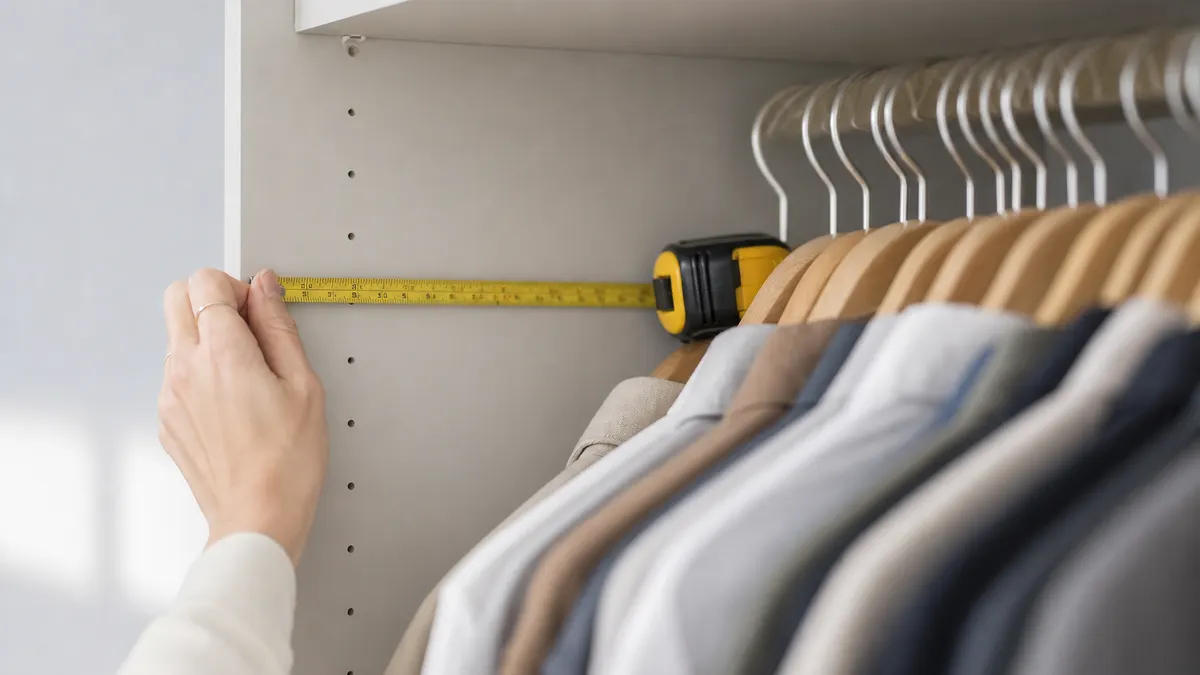
How to Measure Closet Depth Correctly
A few minutes with a tape measure can prevent a rod that sits in the wrong place.
- Measure to the right point. Run the tape from the back wall to the inside face of the closed door, or to the nearest obstruction if one sits closer.
- Account for doors, tracks, and trim. Bifold hardware, sliding tracks, door casing, and baseboards can reduce the space. Use the smallest measurement you find.
- Measure in more than one spot. Walls are not always square. Check near the top, middle, and bottom, and note the lowest number.
- Check hanger and garment space. Hold a loaded hanger in place, or measure the widest hanger you own, then add about 1 to 2 inches for clearance.
- Confirm rod placement. The rod usually sits near the center of the usable depth, about 12 inches from the back wall in a 24 inch closet. Make sure the rod, brackets, and any shelves above it do not interfere.
- Check before installing organizers. Drawers, shoe racks, and pull-out units need their own clearance. Confirm they fit with the door fully open and closed.
Write down depth, width, and height, and mark any outlets, vents, or light fixtures that could affect layout.
Tips for Maximizing Closet Space
Good closet organization ideas start with using the depth you have well.
- Place the rod thoughtfully. A single rod typically sits 66 to 72 inches from the floor. Center it in the usable depth so clothes clear both the wall and the door.
- Use slim hangers where they fit. They work best for shirts, blouses, and lightweight pants. Keep wider, contoured hangers for suits and blazers.
- Separate short and long hanging. Shirts and folded pants need about 36 to 42 inches of vertical space. Dresses and coats need 60 inches or more. Grouping them avoids wasted air under short items.
- Double-hang short items. Stacking two rods (around 40 and 80 inches from the floor) can nearly double capacity for shirts and skirts.
- Add shelves, drawers, and adjustable organizers. Folded items, accessories, and shoes do not need hanging depth at all.
- Use vertical space. Upper shelves hold seasonal items. Floor-level racks and bins use the area below hanging clothes.
- Match the layout to your wardrobe. A closet full of coats needs different depth than one full of work shirts.
When Should You Consider a Custom Closet Design?
Standard builder closets assume an average wardrobe. A custom closet design can make more sense when your space or storage needs do not fit that mold. Common situations include:
- Narrow or shallow closets that need alternative hanging solutions
- Unusually shaped rooms, such as sloped ceilings or angled walls
- Compact bedrooms where every inch of floor space counts
- Wardrobes with specific needs, such as long gowns, uniforms, or a large coat collection
A planned layout lets you mix hanging sections, shelves, and drawers so each type of clothing gets the depth it needs. If you are exploring options, a custom closet company can help you build a layout around your space and how you actually use it.
Frequently Asked Questions
Is 24 inches deep enough for hanging clothes?
Yes, 24 inches is the common standard and works for most everyday clothing. It fits shirts, dresses, and standard jackets comfortably. Very bulky coats may feel tight, and wider hangers need a bit more room.
What is the minimum depth for a hanging closet?
The practical minimum for standard front-facing hangers is about 21 to 22 inches. Below that, clothes tend to press against the door or wall. Closets as shallow as 14 to 16 inches can still work if you use a pull-out rod or turn hangers sideways.
How deep should a closet be for bulky coats?
Plan for 26 to 28 inches of usable depth. Padded and fur-trimmed coats take up more space than the width of a standard hanger suggests, so extra depth keeps them from crushing neighboring items.
Can you hang clothes in a 20-inch-deep closet?
Yes, with adjustments. Slim hangers, lighter garments, and angled hooks can make 20 inches workable. Heavy coats and structured jackets will likely press against the door, so store those elsewhere.
How much clearance should there be between clothes and closet doors?
Aim for at least 1 to 2 inches between the face of hanging garments and the closed door. Check this with your fullest rod, since packed clothing sits farther forward than a few loose pieces.
Is a deeper closet always better?
Not necessarily. Beyond about 28 inches, extra depth often becomes hard-to-reach dead space. A well-planned closet adds shelves, drawers, or a second storage zone in that space instead of leaving it unused.
Conclusion
The ideal closet depth for hanging clothes is usually about 24 inches of usable space, but the right number depends on your clothing, hangers, door clearance, and layout. Measure carefully, count what doors and trim take away, and choose a rod position that gives garments room to hang freely. If your closet is shallow, awkwardly shaped, or simply not working for your wardrobe, you may be ready to explore other options. You can learn more about personalized closet design and organization from Closets Creation.