
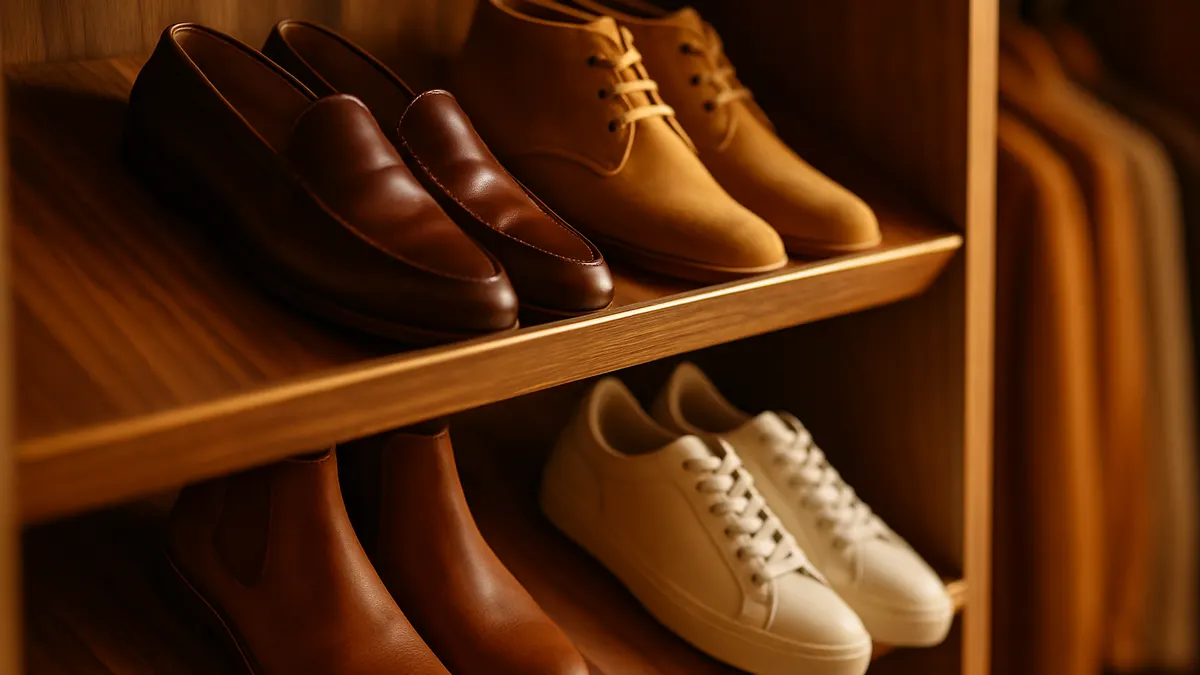
Shoes have a way of taking over a closet. Sneakers get kicked into a corner, boots pile up in a heap, and dress shoes end up buried under everything else. When footwear has no proper place to live, pairs get lost, closets look messy, and shoes wear out faster from being crushed on the floor. A custom closet shoe rack solves this by giving every pair its own spot, sized to fit how you actually live. The right design depends on your shoe types, collection size, closet layout, and how easily you want to reach everything. Here are practical ideas to organize your footwear collection in style.
Why Choose a Custom Closet Shoe Rack?
A standard shoe rack from a store is built for an average closet, not yours. A custom closet shoe rack is designed around the exact dimensions of your space, so no inch goes to waste. Instead of squeezing a bulky rack into a corner, shelving can be built to fit the width, depth, and height you actually have.
Customized shoe storage also lets you plan around your own collection. If you own more sneakers than heels, shelves can be spaced to match, and different shoe types can be divided so nothing gets crushed together. A built in shoe rack keeps shoes visible instead of stacked in boxes, which makes getting ready faster, and vertical space above a hanging rod can also be put to use. The result is a cleaner, more organized closet where every pair has a clear place.
7 Custom Closet Shoe Rack Ideas to Try
1. Adjustable Shoe Shelves
Adjustable shoe shelving is practical because shoe heights vary so much. Sneakers and flats need less clearance than boots or heels. With adjustable shoe shelves, you can raise or lower each shelf to fit what you are storing, and change the spacing later as your collection changes.
2. Angled Shoe Shelves for Better Visibility
When shelves sit higher up or deeper in a closet, flat shelving can make shoes hard to see. Angled shoe shelves tilt footwear forward so the toe of each shoe is visible at a glance. This visible shoe storage is helpful for tall shelving sections, since you will not need to dig through stacked pairs to find one shoe.
3. Floor to Ceiling Shoe Storage
If you have a large shoe collection and limited floor space, floor to ceiling shoe storage makes the most of vertical closet space, keeping footwear organized without spreading shoes across the floor. This layout works especially well in walk in closets with open wall space.
4. Dedicated Boot Storage
Boots do not fit well on shelving built for regular shoes. They need extra height and room to stand upright without folding over, so a custom boot section can be built taller, letting boots keep their shape instead of being squeezed in with sneakers or flats.
5. Pull Out Shoe Shelves
Shoes stored toward the back of a closet are easy to forget about. Pull out shoe shelves slide forward like a drawer, bringing footwear within easy reach even when it sits deep inside the closet or extends further back than an arm can comfortably reach.
6. Shoe Shelves Under Hanging Clothes
The lower portion of a closet, right under hanging clothes, often goes unused, but it is a natural spot for shoe storage. Placing shelves here keeps everyday footwear close to the outfits you pair them with and makes use of space that would otherwise sit empty.
7. Separate Everyday and Occasion Footwear
How you organize by use matters just as much as the shelving itself. Keep sneakers, flats, and other everyday shoes in the easiest to reach spot, put formal shoes worn less often in a less convenient section, and store seasonal footwear higher up or further back until it is needed again.
How to Choose the Right Shoe Rack for Your Closet
Consider your shoe collection.
Sneakers, flats, heels, and boots all need different amounts of space, so plan shelf heights around what you actually own.
Measure available space.
Measure the width, depth, and height of the area you plan to use, and account for door clearance and enough walking space to move through comfortably.
Think about accessibility.
Shoes you wear daily should sit at eye or hand level, while occasional pairs can go higher or lower, where they are used less often.
Plan for future storage.
Avoid designing storage that only fits what you own today. A little extra room lets your shoe rack grow with your collection.
Match the rack to the closet layout.
A walk in closet often supports more extensive shoe shelving, while a reach in closet usually calls for a more compact, space efficient design.
How to Keep a Custom Closet Shoe Rack Organized
Once your shoe rack is built, a little upkeep keeps it working well. Group shoes by type or by how often you wear them, and keep the pairs you use most within easy reach. Avoid overcrowding shelves, since packing them too tightly makes shoes hard to pull out without knocking others over, and leave a small gap between pairs so each one is easy to grab. Rotate seasonal footwear as the weather changes, wipe shoes down before putting them back, and reassess your storage as your collection grows.
Make Your Shoe Storage Work With the Rest of Your Closet
Shoe storage should never block drawers or make it harder to reach hanging clothes. When planning shelving, coordinate it with the other zones in your closet so everything flows together, use vertical space where it makes sense, and keep everyday shoes within easy reach rather than tucked into a hard to access corner. Good closet shelving should feel like one connected system. For more ideas on organizing shelving throughout the closet, take a look at this guide to closet shelving.
When Is a Custom Shoe Rack Worth Considering?
A custom shoe rack starts to make sense when a standard rack no longer fits your needs, such as a closet with unusual dimensions, boots that need extra height, or shoes that are hard to reach because of deep or awkward shelving. It is also worth considering if you own a wide variety of footwear, or if your closet has unused vertical space. In these situations, a design built around your actual routine, similar to a broader custom closet design approach, tends to work far better than a generic rack.
Making Shoe Storage Work for You
A good custom closet shoe rack should make your footwear easier to see, reach, organize, and take care of. The best design is not necessarily the biggest one, but the one that fits your closet’s dimensions and matches how you actually get dressed each day. If your current shoe storage is not working, it may be worth exploring a custom closet design built around your space, with room to grow as your collection does.
Proudly Serving Homeowners Across the Area
We help homeowners design and install custom closet shoe rack solutions across several nearby communities, including Feasterville, Holland, Warminster, and Newtown. Reach out to learn more about custom closet shoe rack options in your area.
Frequently Asked Questions About Custom Closet Shoe Racks
- What is a custom closet shoe rack?
It is shoe shelving built to fit the exact size and layout of your closet, rather than a freestanding rack, designed around your space and the footwear you own.
- How much space should I allow for a closet shoe rack?
Spacing depends on shoe type, size, shelf depth, and whether boots are included, so it is best to plan around your actual collection rather than one universal measurement.
- What type of shoe storage works best for a small closet?
Vertical shelving and adjustable shoe shelves tend to work best, along with using unused space such as the area under hanging clothes.
- Are angled shoe shelves better than flat shelves?
Angled shelves make shoes easier to see at a glance, which helps in taller or deeper sections, though the best choice still depends on your closet layout.
- How should I store boots in a custom closet?
Boots generally need a taller, dedicated section so they can stand upright without folding over, which keeps them in better shape than standard shelves.
- Can a custom shoe rack be added to an existing closet?
In many cases, yes. It depends on your current layout, available space, and how the closet is built, and a closet storage professional can evaluate your space.