
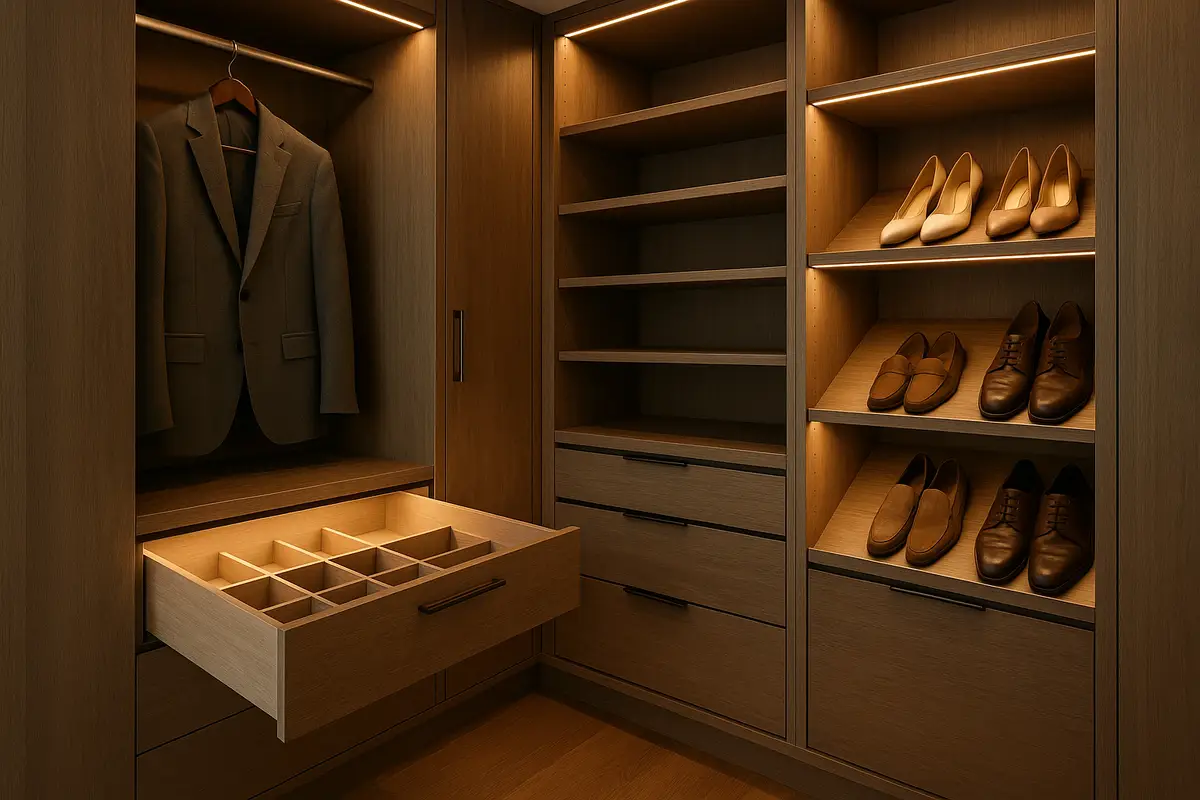
The storage features homeowners most often wish they’d added to their closets include pull-out drawers, dedicated shoe storage, adjustable shelving, double-hang zones, and proper lighting. When the dust settles after a closet remodel, most homeowners are thrilled with the result. But talk to enough of them a year or two later, and a familiar theme appears: it isn’t what they added that they regret, it’s what they left out. The good news is that nearly every one of these regrets is avoidable with a little foresight.
The good news is that nearly every one of these regrets is avoidable with a little foresight. Below, we walk through the storage features people most often wish they’d included, why they matter, and how a thoughtfully designed shelving system can fold them in from the start.
Why Closet Regrets Happen in the First Place
Most closet disappointments come down to one thing: planning for the closet you have today instead of the life you’ll actually live in it. Wardrobes change with the seasons, families grow, hobbies come and go, and the way you get dressed in the morning evolves. A closet built only for this exact moment tends to feel cramped or awkward sooner than expected.
There’s also a tendency to focus on looks over function. A bank of matching shelves photographs beautifully, but if there’s nowhere to hang long coats or stash a hamper, the daily experience suffers. The smartest layouts balance both, which is one reason it helps to review common design pitfalls worth sidestepping before any work begins.
The Storage Features Homeowners Wish They’d Added
H3: 1. Pull-Out Drawers and Built-In Dividers
Open shelving is great until you’re rummaging through a stack of folded sweaters or a tangle of belts. Pull-out drawers with built-in dividers keep smaller items visible and contained, and they’re one of the most common features homeowners say they wish they’d budgeted for. Drawers transform dead vertical space into organized, grab-and-go storage.
2. Dedicated Shoe Storage
Shoes piled on the floor are the fastest way to make any closet feel chaotic. Angled shoe shelves, cubbies, or pull-out racks keep pairs tidy and easy to see. Homeowners frequently underestimate how much room a growing shoe collection demands, then run out of space within a year.
3. Adjustable Shelving
Fixed shelves lock you into one configuration forever. As your needs shift, that rigidity becomes a daily frustration. Adjustable shelving options let you raise, lower, or add shelves as your wardrobe changes, which is exactly why so many people regret choosing permanent, built-in heights instead.
4. Double-Hang and Specialty Hanging Zones
Not all clothing hangs the same way. Shirts and folded trousers need only short rods, while dresses and coats require full height. Combining double-hang sections with a dedicated long-hang zone roughly doubles your hanging capacity. Skipping this is a classic oversight that leaves long garments dragging on the floor.
5. Proper Lighting
A closet you can’t see into is a closet you can’t fully use. Many homeowners forget lighting entirely, then squint at colors and labels in the shadows. Integrated LED strips, puck lights, or motion-activated fixtures make a dramatic difference and are far harder to add after installation.
6. A Spot for the Hamper and Out-of-Season Items
Two of the most overlooked needs are a built-in laundry hamper and storage for seasonal gear. Without a designated home, dirty laundry ends up on the floor and bulky winter coats crowd out everything else. Planning a pull-out hamper and high or deep shelving for off-season storage solves both problems at once.
Smaller Touches That Make a Big Difference
Beyond the big-ticket features, several smaller additions show up again and again on homeowners’ wish lists:
- Valet rods for laying out tomorrow’s outfit or steaming clothes
- Built-in jewelry and accessory trays to keep small items from disappearing
- A bench or seating area for comfortable dressing
- Mirrors mounted inside the closet rather than across the room
- Power outlets for charging devices or running a handheld steamer
These details cost relatively little when planned upfront, yet they’re tough to retrofit later. A dedicated grooming station with good light and drawer space, for instance, can turn a basic closet into a space that genuinely streamlines your morning routine.
Matching Features to How You Actually Live
The best way to avoid regret is to design around your real habits rather than a generic template. If you entertain often, you might prioritize an efficient food-storage layout in the kitchen. If laundry is a constant battle, building out a tidy utility space with hampers and folding surfaces pays off daily. And for those who want a little luxury, a true dressing-room experience brings shelving, hanging, and seating together in one comfortable space.
This is also where fully personalized storage built around your home earns its keep. A custom approach measures your space, studies your wardrobe, and designs every inch around the way you live, so the regrets simply never have a chance to form.
Plan Once, Enjoy It for Years
Closet regret almost always traces back to a rushed plan or a focus on appearance over everyday use. By thinking through drawers, shoe storage, adjustable shelving, smart hanging zones, lighting, and the little finishing touches before installation begins, you give yourself a space that keeps working long after the novelty wears off.
Ready to design a closet you won’t second-guess? Reach out to Closets Creation for a free consultation, or get in touch with our team to start planning a layout built around the way you actually live.
FAQs
What storage features do homeowners regret not adding to their closet?
The most common regrets include pull-out drawers with dividers, dedicated shoe storage, adjustable shelving, double-hang sections for different clothing types, and proper lighting. These features are far easier to plan upfront than to retrofit later.
Why do people forget to add proper lighting to a closet?
Lighting is often overlooked because it’s easy to focus on shelving and storage layout instead. Without it, colors and labels become hard to see in the shadows, which is why homeowners frequently say they wish they’d added integrated LED strips or motion-activated fixtures from the start.
Is adjustable shelving worth it in a custom closet?
Yes, fixed shelves lock you into one configuration permanently, while adjustable shelving lets you raise, lower, or add shelves as your wardrobe and storage needs change over time. It’s one of the most commonly requested upgrades homeowners wish they’d chosen originally.
How much closet space should be dedicated to shoe storage?
There’s no fixed rule, but homeowners often underestimate how quickly a shoe collection grows, running out of dedicated space within a year of installation. Angled shelves, cubbies, or pull-out racks planned generously from the start help avoid this common shortfall.
What small closet features make the biggest daily difference?
Valet rods, built-in jewelry trays, mirrors, and power outlets for charging or steaming are small additions that cost relatively little upfront but are difficult to add after installation. Homeowners consistently list these among their most-missed features.
Should I plan a closet around my current wardrobe or future needs?
Design around how your life will realistically change, not just your wardrobe today. Families grow, seasons shift, and hobbies come and go, so a closet built only for the present moment tends to feel cramped sooner than expected.