
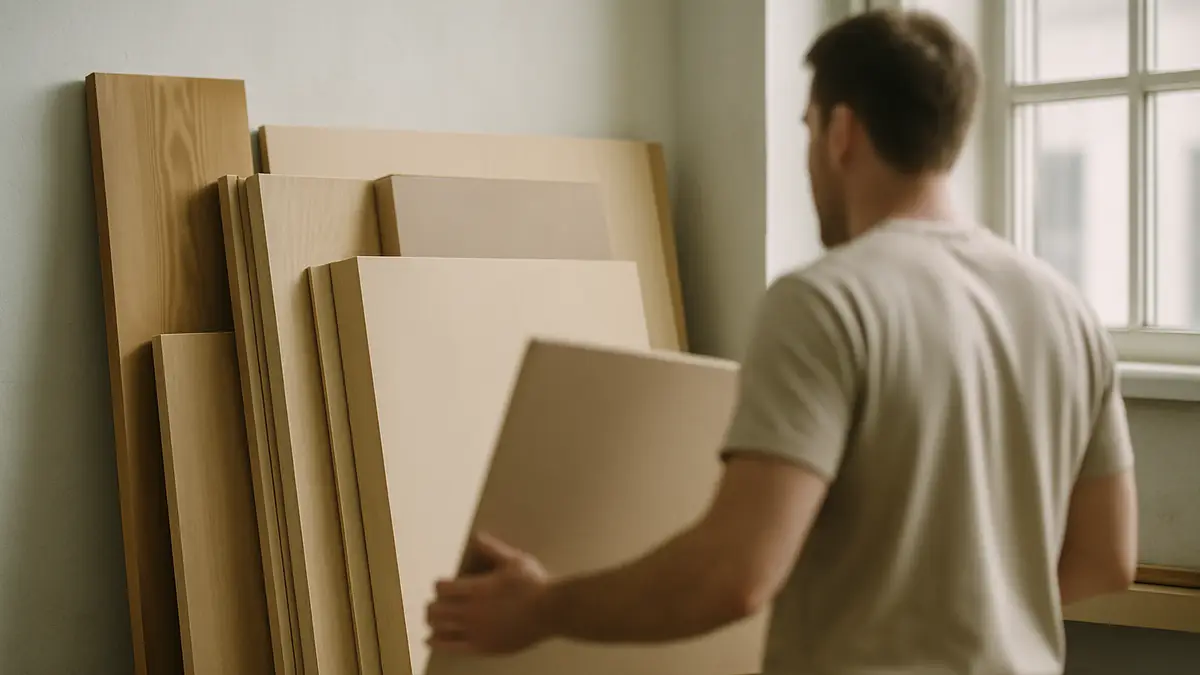
When you’re planning new closet or storage shelving, the material you choose has more impact on long-term performance than almost any other decision you’ll make. Solid wood, plywood, and MDF (medium-density fiberboard) all look similar once painted or stained, but they behave very differently under weight, humidity, and years of daily use.
Solid wood is the most durable and longest-lasting shelving material, holding its shape under heavy loads and resisting warping for decades. Plywood is a close second, offering strong, moisture-resistant performance at a lower price. MDF is the least durable of the three — it’s smooth and affordable, but it sags under weight and swells if it gets wet, so it’s best reserved for light-duty, low-humidity spaces.
Below, we’ll break down how each material performs, what actually determines shelving lifespan, and how to pick the right option for your home.
What Are Solid Wood, Plywood, and MDF?
Before comparing durability, it helps to know what each material actually is.
Solid Wood
Solid wood is milled directly from tree lumber — oak, maple, birch, or pine, for example — with the natural grain running through the entire board.
Plywood
Plywood is made of thin wood veneer layers glued together with the grain of each layer running perpendicular to the next, which gives it added strength and stability.
MDF
MDF is engineered from wood fibers, resin, and wax, compressed under heat and pressure into dense, smooth sheets with no visible grain.
Each of these materials has a place in closet design, but their internal structure is exactly why they age so differently once shelves are loaded with clothing, shoes, or storage bins.
Solid Wood, Plywood, and MDF: Side-by-Side Comparison
Feature | Solid Wood | Plywood | MDF |
Durability | Excellent | Very Good | Fair |
Moisture Resistance | Good to Excellent | Good | Poor |
Weight Capacity | High | High | Moderate to Low |
Warping Risk | Low | Low | Higher Over Time |
Cost | Highest | Mid-Range | Most Affordable |
Typical Lifespan | 25+ Years | 15-25 Years | 5-10 Years |
Best For | Long-Term, Heavy-Use Shelving | Balanced Strength & Budget | Light-Duty, Dry-Climate Closets |
Solid Wood Shelving: Built for the Long Haul
Solid wood is the benchmark other materials get compared against, and for good reason. Its dense, natural grain structure gives it exceptional strength across long spans, so shelves stay flat and level even when they’re loaded with sweaters, shoes, or storage bins year after year. Well-finished solid wood also handles moderate humidity swings — common in closets near bathrooms or exterior walls — without swelling or losing its shape.
Homeowners who want shelving that will still look and perform the same way two decades from now generally lean toward solid wood closet shelving systems, since the material can be sanded, refinished, and repaired rather than replaced. The tradeoff is cost: solid wood carries the highest price tag of the three materials, and its weight makes installation more demanding.
Plywood Shelving: A Reliable Middle Ground
Plywood earns its reputation as the practical choice for most closet projects. Because each layer’s grain runs opposite to the one beneath it, plywood resists warping, splitting, and twisting better than a single solid board of the same thickness. That cross-layered construction also makes it lighter than solid wood while still holding substantial weight without sagging.
Cabinet-grade plywood, in particular, offers a smooth surface for paint or laminate finishes and performs well in closets with moderate humidity. It won’t match solid wood’s decades-long lifespan, but a well-built plywood shelf can easily last 15 to 25 years with normal use, making it a smart balance between cost and durability.
MDF Shelving: Budget-Friendly but Less Durable
MDF is popular for its ultra-smooth, paint-ready surface and lower upfront cost, but it’s the least forgiving of the three materials over time. Because MDF is made from compressed wood fibers rather than solid or layered wood, it has less internal strength to resist bending. Long, unsupported spans of MDF shelving are prone to sagging under sustained weight, especially when loaded with heavier items like folded jeans, shoes, or storage boxes.
Moisture is MDF’s biggest weakness. Even brief exposure to humidity or a small water leak can cause the edges to swell and crumble, since the fibers absorb moisture much faster than solid wood or plywood. MDF still has a place in closet design — it works well for light-duty shelving in dry, climate-controlled rooms — but it typically needs replacing sooner than the other two options.
How Humidity and Load Affect Shelving Lifespan
Material choice matters, but two environmental factors often decide how long any shelf actually lasts: moisture exposure and weight distribution.
Closets near bathrooms, laundry rooms, or exterior walls tend to experience more humidity swings, which accelerates warping in lower-grade materials. Shelf spacing matters just as much — shelves spaced too far apart without center support will sag over time regardless of material, though solid wood and plywood tolerate this stress far better than MDF.
Homeowners organizing a wooden closet for the first time often underestimate how much daily use adds up. Distributing weight evenly, adding support brackets on longer spans, and avoiding overloading a single shelf all extend the practical lifespan of whatever material you choose.
Common Signs Your Shelving Needs Replacing
Even durable materials eventually show wear, and catching the warning signs early can prevent a small sag from turning into a shelf failure. A visible dip or bow in the middle of a shelf is usually the first sign that the span is too long for the material or that support brackets are missing. Soft, crumbling edges, especially on MDF, often point to moisture damage that will keep spreading if it’s not addressed. Cracking, splitting, or a shelf that feels loose at the wall connection can also signal it’s time for a repair or replacement before the shelf gives way under load. Checking closet shelving once or twice a year, particularly after humid summer months, helps catch these issues while they’re still an easy fix.
If shelving is already sagging, crumbling, or outdated, replacement is often more cost-effective than repeated patch repairs. Planning a full closet shelving upgrade also gives you the chance to reconfigure the layout for better organization, not just swap materials.
How to Choose the Right Shelving Material for Your Closet
The best material depends on your closet’s conditions, budget, and how long you want the shelving to last.
- Choose solid wood if you want maximum durability, plan to stay in your home long-term, or are storing heavy items like folded linens or luggage.
- Choose plywood if you want strong, moisture-resistant shelving at a more moderate price point.
- Choose MDF if your budget is tight, the closet is in a dry area, and you’re storing lighter items.
- Factor in humidity, since closets near bathrooms or basements benefit from solid wood or plywood over MDF.
- Plan for load, because heavier storage needs call for thicker material and additional support brackets, regardless of which wood product you choose.
Reviewing real installations can also make the decision easier. Browsing a closet project gallery shows how each material looks and performs in finished spaces, which helps you visualize the right fit before committing.
If you’re weighing options for a specific room, exploring custom closet design services in Yardley can help match the right material to your closet’s layout and humidity level.
Why Professional Installation Extends Shelving Life
Even the best material won’t perform well if it’s installed incorrectly. Proper stud alignment, adequate bracket spacing, and level mounting all reduce the stress that causes sagging and warping over time. Professional installers also account for local humidity conditions and household load requirements, which is especially useful in areas with seasonal moisture swings.
For homeowners in the region, working with a team that offers wood shelving installation in Yardley ensures the shelving is fitted and supported correctly from day one, rather than relying on generic hardware-store brackets that may not hold up under real-world use.
Final Thoughts
Choosing between solid wood, plywood, and MDF ultimately comes down to how long you want your shelving to last, your budget, and the conditions inside your closet. Solid wood offers unmatched longevity, plywood provides a dependable middle ground, and MDF suits lighter, budget-conscious projects in dry spaces. Whichever material fits your home, working with an experienced team like Closets Creation ensures your shelving is selected, built, and installed to hold up for years to come.
Frequently Asked Questions
Which lasts longer: solid wood, plywood, or MDF shelving?
Solid wood lasts the longest, often 25 years or more with proper care, followed by plywood at 15 to 25 years. MDF typically lasts 5 to 10 years before sagging or moisture damage requires replacement.
Is plywood better than MDF for closet shelving?
Yes, in most cases. Plywood’s layered construction resists warping and moisture far better than MDF, and it holds significantly more weight without sagging.
Does MDF sag over time?
Yes. MDF has less internal strength than solid wood or plywood, so long unsupported shelves made from MDF are more likely to bow or sag under sustained weight.
Is solid wood shelving worth the extra cost?
For most homeowners planning to stay in their home long-term, yes. Solid wood’s durability, repairability, and resistance to warping typically offset its higher upfront price over the shelving’s lifespan.
Can MDF shelving handle a humid closet?
Not well. MDF absorbs moisture quickly, which causes swelling and crumbling at the edges. Plywood or solid wood are better suited to closets near bathrooms or exterior walls.
How much weight can plywood shelving hold?
Cabinet-grade plywood at three-quarter-inch thickness can typically support substantial loads across standard closet spans, especially when properly braced, making it suitable for most clothing, shoe, and storage needs.
Do I need support brackets for wood shelving?
Yes, for spans longer than about 32 to 36 inches. Support brackets or center supports reduce sagging risk regardless of material, though solid wood and plywood tolerate longer unsupported spans than MDF.
What’s the most cost-effective shelving material overall?
Plywood generally offers the best balance of cost, strength, and lifespan, making it the most cost-effective choice for homeowners who want durability without paying for solid wood.