
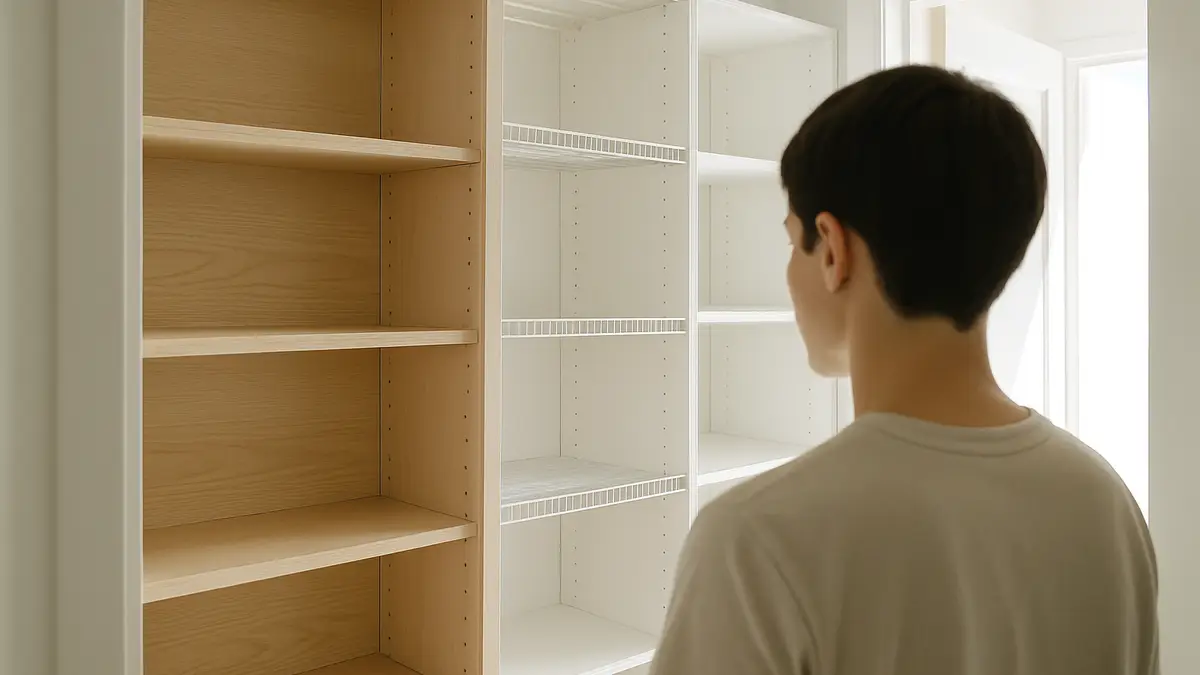
Wood shelving offers the richest look and the highest weight capacity, wire shelving is the most affordable and breathable option, and melamine sits in between with a smooth, modern finish at a moderate price. The best choice comes down to your budget, how much your closet needs to hold, and the style you want your home to reflect.
What Is Closet Shelving Material, and Why Does It Matter?
Closet shelving is more than a place to stack sweaters. It is the structural backbone of every closet system, and the material you choose affects how much weight it can hold, how long it lasts, how it looks, and how much it costs to install. Homeowners generally choose between three main materials: solid or engineered wood, coated wire, and melamine-coated particleboard. Each one performs differently depending on the closet’s purpose, whether that’s a primary bedroom walk-in, a linen closet, a pantry, or a mudroom storage nook. Understanding the strengths and limitations of each material up front helps you avoid a costly redo a few years down the road.
Wood Closet Shelving: Durable, Elegant, and Built to Last
Wood is what most people think of when they picture a really nice closet. It’s sturdy stuff — solid wood and good-quality plywood shelves can hold up sweaters, shoes, storage bins, and all the other things that pile up over time, without bending or sagging. It also just looks warmer and richer than most other materials out there. That’s a big reason so many homeowners choose custom closet organization systems when it’s time to upgrade their storage space.
- Exceptional strength and weight capacity, even for long spans
- A timeless look that works with nearly any interior design style
- The ability to be stained, painted, or finished to match existing woodwork
- Long-term durability, often lasting decades with minimal upkeep
The trade-offs are worth noting too. Wood shelving typically costs more than wire or melamine, and it requires professional measuring and installation to avoid warping or uneven support over time. It can also be more susceptible to moisture damage in humid basements or laundry areas unless it is properly sealed.
Wire Closet Shelving: Lightweight, Breathable, and Budget-Friendly
Wire shelving is the option most people recognize from big-box hardware stores, and it remains popular because it is inexpensive, quick to install, and allows air to circulate around stored items. This ventilation makes it a smart pick for linen closets, pantries, and laundry rooms where moisture or odor control matters.
- The lowest upfront cost of the three materials
- Excellent airflow, which helps prevent mustiness in stored linens or shoes
- Easy do-it-yourself installation for smaller closets
- A lightweight structure that’s simple to reconfigure
However, wire shelving has real downsides. The metal grid can leave impressions in delicate fabrics, thin items like belts or scarves can slip through the gaps, and the utilitarian look rarely matches a polished, custom-designed closet. It also tends to sag under heavy, concentrated weight over time, which is why so many homeowners eventually move up to custom closet shelves for Newtown, PA homes once they see how much more a tailored system can offer.
Melamine Closet Shelving: Sleek, Smooth, and Versatile
Melamine shelving is particleboard or MDF covered with a hard, laminate-like coating, and it has become the go-to choice for homeowners who want a clean, furniture-grade appearance without paying wood prices. It comes in white, wood-tone, and dozens of other finishes, so it blends easily into modern, transitional, or traditional bedrooms alike.
- A smooth, easy-to-wipe-clean surface
- A polished, boutique-store appearance at a moderate price point
- Wide availability in colors and finishes to match any room
- Solid weight capacity for everyday clothing, shoes, and folded items
On the downside, melamine can chip along its edges if it’s bumped or dropped, and it is heavier than wire, which means it needs sturdy brackets or supports. It also isn’t as forgiving as solid wood if you want to resize or refinish a system later, though this middle ground is exactly why so many custom-made closets in Newtown, PA are built with melamine shelving today.
Wood vs. Wire vs. Melamine: Side-by-Side Comparison
Feature | Wood | Wire | Melamine |
|---|---|---|---|
Average Cost | Highest | Lowest | Mid-range |
Weight Capacity | Excellent | Fair | Good |
Moisture Resistance | Moderate (needs sealing) | Excellent | Moderate |
Aesthetic Appeal | Premium, warm | Basic, utilitarian | Clean, modern |
Maintenance | Low, occasional refinishing | Very low | Low, wipe-clean |
Best For | Primary closets, walk-ins | Pantries, laundry rooms | Bedroom closets, reach-ins |
How to Choose the Right Shelving Material for Your Closet
- Assess how the closet is used. A pantry or laundry room benefits from wire’s ventilation, while a primary bedroom closet usually calls for the polish of wood or melamine.
- Set a realistic budget. Wire is the most economical, melamine offers a strong middle ground, and wood is the premium investment.
- Calculate the weight the shelves will carry. Heavy sweaters, shoe collections, and storage bins need the reinforced strength of wood or well-supported melamine.
- Match your home’s existing style. Wood tends to suit traditional and farmhouse interiors, while melamine fits cleanly into modern and transitional spaces.
- Factor in long-term maintenance. If you want a system that rarely needs attention, melamine and wire both wipe clean easily, while wood may need occasional refinishing.
Thoughtful closet shelving upgrades that transform cramped storage into functional space often combine two materials, using wood or melamine for visible, high-traffic sections and wire for hidden or overflow areas.
Common Mistakes to Avoid When Choosing Closet Shelving
- Choosing the cheapest option without considering long-term weight demands
- Ignoring humidity levels in the room, which can warp wood or rust wire over time
- Skipping professional measurements, leading to gaps, sagging, or wasted space
- Failing to plan for future storage needs, like growing a family’s wardrobe
Overlooking common pitfalls that show up when designing a custom closet system, such as insufficient hanging space or shelving spaced too far apart, is another frequent issue homeowners run into.
Caring for Your Closet Shelving Long-Term
Every material benefits from a little routine care. Wood shelving should be dusted regularly and kept away from prolonged moisture exposure; an occasional coat of polish or sealant keeps it looking new. Wire shelving rarely needs more than a wipe-down, though it’s worth checking brackets periodically to make sure they haven’t loosened. Melamine can be cleaned with a damp cloth and mild soap, and edges should be protected from heavy impacts to avoid chipping. For households that want a deeper dive into organizing a wooden closet efficiently, small adjustments like drawer dividers and labeled bins go a long way toward keeping shelving systems tidy for years.
Which Material Adds the Most Value to Your Home?
If resale value and long-term appeal are priorities, wood shelving tends to offer the strongest return, since buyers often view it as a sign of a well-maintained, higher-end home. Melamine is a close second, delivering a polished look that photographs well for real estate listings without the premium price tag. Wire remains the practical choice for secondary spaces where function matters more than style. Reviewing expert-ranked closet organization systems can help homeowners see how each material performs across real-world durability and design tests before making a final decision.
Making the Right Choice for Your Home
Choosing between wood, wire, and melamine ultimately comes down to how a closet will be used, how much it needs to hold, and the look a homeowner wants to achieve throughout their home. A blended approach, matching each material to the right space, often delivers the best combination of durability, style, and value. For homeowners ready to compare these materials in person and design a system suited to their exact space, Closets Creation offers hands-on guidance from measurement through installation.
Frequently Asked Questions
Is wood or wire shelving better for a closet?
Wood is better for weight capacity and appearance, while wire is better for ventilation and budget. The right choice depends on the closet’s purpose and how much you plan to store.
Does melamine shelving sag over time?
Melamine can sag under very heavy, concentrated loads if it isn’t properly supported, so it should be installed with adequate brackets and, for longer spans, a center support.
Which closet shelving material is the most affordable?
Wire shelving is generally the least expensive option, followed by melamine, with solid wood typically being the most costly investment.
Can wood shelving handle a humid environment?
Solid wood can handle moderate humidity if it’s properly sealed or finished, but it isn’t ideal for consistently damp spaces like unfinished basements without added moisture protection.
Is melamine shelving easy to clean?
Yes, melamine has a smooth, non-porous surface that wipes clean with a damp cloth and mild soap, making it a low-maintenance choice for everyday closets.
How long does wood closet shelving typically last?
Well-installed wood shelving can last several decades with basic care, making it one of the most durable long-term investments for a closet system.
Do wire shelves damage clothing?
Wire shelving can leave temporary crease marks on delicate fabrics and allow thin items to slip through the gaps, which is why many homeowners pair it with liners or bins.
Which material is best for a small closet?
Melamine and wood both make efficient use of vertical space with custom-fit shelving, while wire works well for smaller secondary closets where budget is the main concern.