How Much Weight Can Custom Shelves Hold?
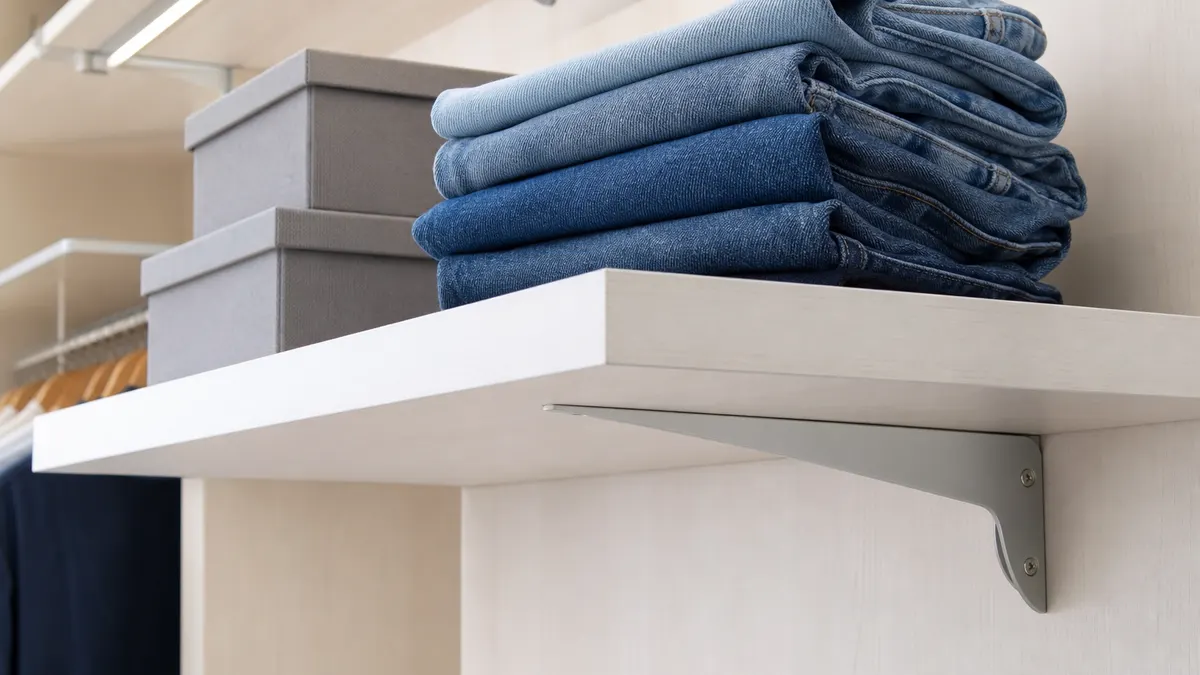
There is no single number that applies to every custom shelf. A custom closet shelf’s capacity depends on the material, thickness, width, depth, support spacing, bracket strength, installation method, and the wall behind it. A shelf that holds folded sweaters easily may sag under a row of heavy storage bins, even if both are the same board.
Treat any figure you see online as a rough guide, not a guaranteed safe load. For a specific system, rely on the manufacturer’s published specifications or a capacity recommendation for your exact design.
What Determines the Weight Capacity of Custom Shelves?
A shelf is only one part of a system. Its real capacity comes from how several factors work together:
- Shelf material: Solid wood, plywood, MDF, and laminated particleboard bend, resist moisture, and hold fasteners differently.
- Shelf thickness: Thicker panels generally resist bending better, but thickness alone doesn’t set capacity.
- Shelf span: The longer a shelf runs between supports, the more likely it is to bow over time.
- Support spacing: Brackets, cleats, dividers, and center supports all affect how load is carried.
- Installation quality: Studs, anchors, and fasteners must suit the wall and the load.
- Load distribution: Weight spread evenly is easier on a shelf than a heavy object in one spot.
- Environment: Humidity and moisture can weaken some wood-based materials over time.
When planning tailored shelving for your closet, choose the dimensions, materials, and support system together, based on what you actually plan to store.
How Much Weight Can Different Closet Shelving Materials Hold?
Published capacities vary by product, so this section compares material behavior rather than quoting numbers. Any figure should come from a manufacturer’s data or an engineering reference, and you should check whether it applies per shelf, per linear foot, or to the whole system.
- Solid wood: It is strong and stiff, holds screws well, and can be refinished. Species, grain, and moisture content vary, so quality differs from board to board. Real wood shelf options are a common choice where strength, appearance, and repairability matter.
- Plywood: Its layered construction resists warping and bends predictably over a span. It is often a good fit for longer shelves and moderate to heavy loads, depending on grade and thickness.
- MDF: It is smooth, stable, and takes paint well. It is generally more prone to sagging over long spans and is sensitive to moisture, so it suits lighter storage with adequate support.
- Laminated particleboard: The laminate is durable and easy to clean, and the panels are cost-effective. Capacity depends on the core quality and edge protection, and moisture can damage exposed edges.
If you’re weighing species and grades, this guide to picking the best wood for your shelves goes into more detail.
Material strength is not the same as system capacity. A strong board on weak brackets or poor anchors is still a weak shelf.
How Do Shelf Thickness and Support Spacing Affect Capacity?
Thickness helps, but span often matters more. A long, thin shelf with supports only at the ends will bow under load. Adding a center support, a divider, or extra brackets shortens the unsupported span and spreads the load. A long shelf may need that help even when it’s made from a strong material.
If you want to see how solid wood, plywood, and MDF stack up on durability, look at how each handles sustained load over time, since sagging usually develops gradually.
Some everyday examples:
- Folded clothing: This is a light, evenly spread load that most well-built shelves handle comfortably.
- Shoes: The weight is moderate but spread across many small contact points, so spacing and depth matter.
- Storage bins: Loaded bins add concentrated weight, so check the shelf span and supports before stacking them.
- Heavier household items: Items like books, small appliances, or luggage may need reinforced shelves or a different location.
Never exceed the rated limits for your system, and don’t assume a shelf can handle more because it looks sturdy.
How to Prevent Custom Closet Shelves from Sagging
Preventing sagging comes down to planning, installation, and upkeep:
- Choose a material suited to the intended load.
- Use appropriate shelf thickness and support spacing.
- Distribute stored items evenly across the shelf.
- Follow the installation and manufacturer guidelines.
- Anchor the system into suitable structural supports, such as studs, using hardware rated for the wall type.
- Avoid heavy loads on unsupported spans.
- Inspect shelves and brackets from time to time.
- Address visible bending, loose brackets, or damaged panels promptly.
Are Custom Shelves Better for Heavy Storage?
They can be, because a custom design can be planned around your actual storage needs, available space, material choices, and support placement. That is the advantage over off-the-shelf units, which are built for general use.
Customization alone doesn’t guarantee a higher weight capacity, though. Performance depends on the design, materials, hardware, installation, and documented load ratings. Planning a closet layout built around your household’s storage needs lets you place shelves, dividers, and supports where the heaviest items will sit.
When Should You Upgrade Your Closet Shelving?
Watch for these warning signs:
- Persistent sagging or visible bowing
- Cracked or split panels
- Loose brackets or damaged anchors
- Swelling, especially near edges
- Shelves that wobble or feel unstable
Depending on the cause, a shelf may need extra support, repair, professional assessment, or replacement. If a shelf looks damaged or unstable, remove the stored weight until it has been assessed.
Choosing the Right Custom Shelving Solution
Before you plan, list what you’ll store and roughly how heavy it is. Then consider shelf dimensions, material preferences, and how your needs may change over time. Those answers guide the materials, thickness, and supports a durable system needs.
Closets Creation designs custom closets around how homeowners actually live. If you’re thinking about new shelving or a closet redesign, you’re welcome to explore the options and see what would work for your space.
Frequently Asked Questions About Custom Shelf Weight Capacity
How much weight can a custom closet shelf hold?
It depends on the material, thickness, span, supports, and installation. There is no universal figure. Use the manufacturer’s specifications for your system, or ask your closet designer for a capacity recommendation based on your exact shelf design and planned contents.
Which shelving material is strongest for heavy items?
Solid wood and quality plywood are generally better suited to heavier loads than MDF or standard particleboard. Still, results depend on grade, thickness, span, and supports. Compare manufacturer data for the specific product, and don’t judge strength by material type alone.
Does thicker shelving hold more weight?
Often, yes, because thicker panels resist bending better. But thickness is only one factor. A thick shelf with a long unsupported span or weak anchors can still sag or fail, so thickness should be planned alongside supports and installation.
How far apart should shelf support brackets be?
No single spacing rule fits every shelf. The right distance depends on the material, thickness, bracket type, and load. Follow the hardware manufacturer’s guidelines, and ask a professional to assess spacing for heavy loads or long spans.
Can MDF shelves hold heavy clothing and storage bins?
MDF can work for lighter loads with adequate support, but it is more prone to sagging over long spans and sensitive to moisture. For heavy bins or long shelves, consider a stiffer material or add center supports, and check the product’s rating.
How can I stop my closet shelves from sagging?
Start with a material and thickness suited to the load, shorten long spans with center supports, and spread weight evenly. Anchor the system securely and inspect it periodically. If a shelf is already bowing, reduce the load and have it assessed.
How do I know if my closet shelf is overloaded?
Visible bowing, creaking, loose brackets, or fasteners pulling from the wall are common signs. A shelf that sags more over time may be overloaded. Remove some weight, and if the damage is visible, have it professionally assessed before reloading it.