
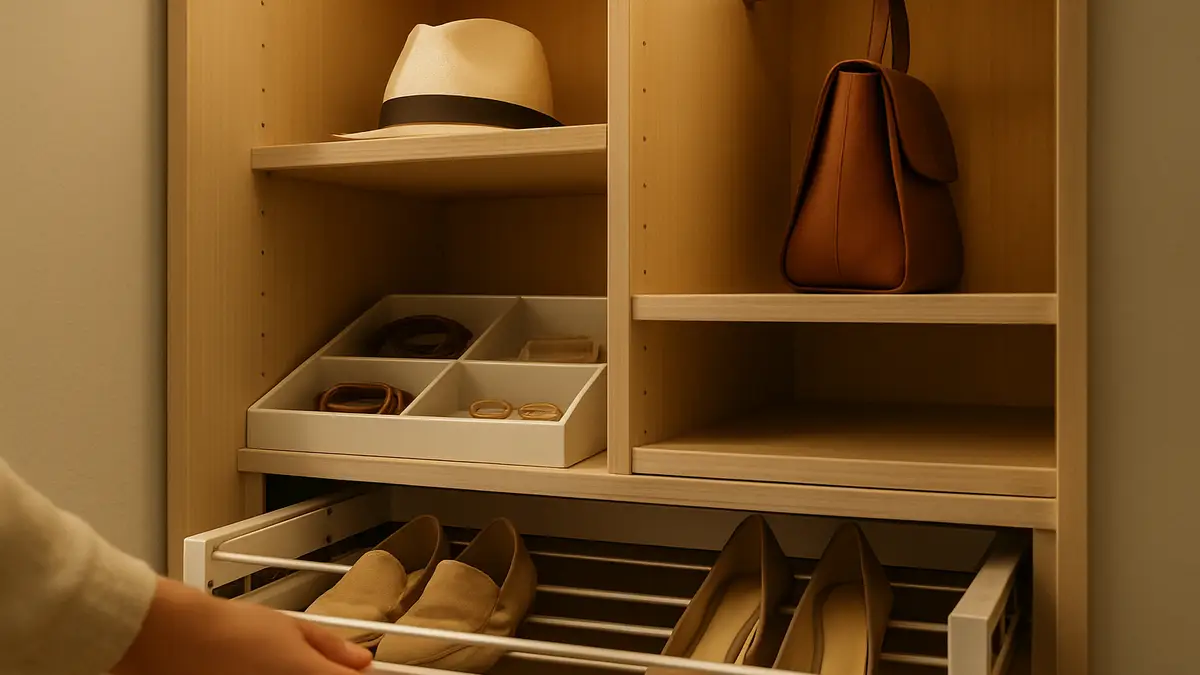
The right closet accessories turn a plain hanging space into a system that actually works for daily life. Adjustable shelving, drawer dividers, valet rods, and specialty racks help you see what you own, protect delicate items, and cut down on the morning scramble to find a matching pair of shoes. Below is a practical breakdown of the accessories worth adding, how to choose them, and how to keep a closet organized for the long haul.
What Are Closet Accessories and Why Do They Matter?
Closet accessories are the add-on components — shelves, rods, bins, dividers, and racks — that turn an empty box of a closet into a functional storage system. A closet without them is just wall space and a single bar; with them, every item in your wardrobe gets a dedicated spot. That distinction matters because clutter is rarely about having too much stuff. It’s usually about not having enough structure to hold what you already own.
Homeowners who invest in the right combination of accessories report less time spent searching for clothes, fewer wrinkled or damaged garments, and a closet that looks intentional rather than crammed. The payoff compounds over time, since a well-organized closet is also easier to maintain season after season.
Must-Have Closet Accessories for Everyday Organization
Some accessories are non-negotiable if you want a closet that functions well every single day. These are the pieces that handle the bulk of your wardrobe:
- Adjustable shelving for folded clothes, handbags, and storage bins that can move as your needs change
- Drawer dividers to keep socks, underwear, and accessories from turning into a jumbled pile
- Double-hang rods that stack shorter garments like shirts and skirts to double vertical capacity
- Pull-out shoe racks that angle footwear for easy viewing without stacking boxes
- Valet rods for laying out tomorrow’s outfit or hanging items fresh from the dryer
- Tie and belt racks that keep thin accessories from sliding off standard hangers
- Jewelry trays with felt lining to prevent tangling and scratching on fine pieces
Most of these accessories work best when they’re paired with a shelving system built to your closet’s actual dimensions rather than a generic, off-the-rack unit. Adjustable closet storage shelves are a good starting point because they flex as your wardrobe grows or shifts with the seasons, giving every accessory above a stable place to sit.
How to Choose the Right Accessories for Your Closet
Picking accessories at random rarely produces a closet that feels organized. A short, deliberate process works better:
- Take inventory of your wardrobe. Count how many folded items, hanging garments, shoes, and accessories you actually own before buying anything.
- Measure the space precisely. Note the width, depth, and ceiling height so shelving and rods fit without wasted gaps.
- Rank items by daily use. Frequently worn clothes and shoes should sit at eye level and within easy reach; seasonal items can go higher or lower.
- Balance function with appearance. Choose finishes and hardware that match the rest of the room, since a closet is often visible from the bedroom.
- Leave room to grow. Wardrobes change, so pick a system that can be reconfigured rather than one that’s fixed in place.
Following this order prevents the common mistake of buying attractive bins or racks that don’t actually match how a household lives day to day.
Accessories That Add a Designer Touch
Once the functional basics are in place, a handful of accessories elevate a closet from purely practical to genuinely stylish:
- Glass-front drawers that display folded knitwear or accessories like a boutique shelf
- Built-in LED lighting that highlights shelves and makes early-morning dressing easier
- Woven or leather-lined baskets for a warmer, less clinical look than plastic bins
- Decorative hooks and knobs in brushed brass or matte black for a finished feel
- A dedicated island or bench for seating and folding, in larger walk-in spaces
For inspiration on how these finishing touches come together in real homes, the custom closet accessory gallery showcases a range of completed projects that pair function with a polished, designer-level look.
These design-forward additions tend to matter most in closets that double as dressing rooms, since the space is used for more than just storage. A closet with good lighting and a place to sit becomes part of the daily routine rather than a room you visit only to grab an item and leave. Even in more modest closets, small design choices — a single row of glass-front drawers or one warm-toned basket — can shift the overall feel of the space without adding much cost.
Small Closet vs. Large Closet Accessory Strategies
The right accessory mix changes depending on how much square footage you’re working with. The table below compares priorities for each scenario.
Feature | Small Closet Priority | Large/Walk-In Closet Priority |
Shelving | Slim, adjustable shelves to maximize vertical space | Multi-tier shelving with dedicated zones per category |
Rods | Double-hang rods to double capacity | Mixed single and double rods for varied garment lengths |
Shoe storage | Over-the-door or slim pull-out racks | Angled shoe shelving or a dedicated shoe wall |
Lighting | Small battery-powered LED strips | Wired ceiling or shelf-integrated lighting |
Extras | Multi-purpose hooks and bins | Islands, benches, and jewelry drawers |
Smaller closets benefit most from accessories that stack function vertically, since floor space is limited. If square footage is tight, maximizing every inch of small closet space often comes down to choosing slimmer hardware and skipping bulky freestanding pieces in favor of wall-mounted options.
Common Mistakes to Avoid When Adding Closet Accessories
Even well-intentioned upgrades can backfire if a few common pitfalls aren’t addressed first:
- Buying accessories before measuring. A rack or shelf that’s a half-inch too wide or too deep can throw off an entire layout, so measurements should always come before purchases.
- Overloading a single zone. Stacking too many bins on one shelf or hanging too much weight on a single rod shortens the lifespan of both the hardware and the garments.
- Ignoring ventilation. Enclosed bins and tightly packed shelving can trap moisture, which leads to musty odors and, in humid climates, mildew on fabric.
- Choosing style over function. A beautiful basket that’s too small to hold anything useful ends up as clutter rather than storage.
- Skipping a walkthrough of daily habits. Accessories that don’t match how a person actually gets dressed each morning tend to go unused within a few weeks.
Avoiding these missteps up front saves time, money, and the frustration of redoing a closet twice. A short planning phase, even just a weekend of measuring and listing priorities, pays off far more than jumping straight to a shopping cart.
Maintaining Your Closet Accessories for Long-Term Organization
Buying the right accessories is only half the equation — keeping them organized is what makes the investment last. A few habits help:
- Do a seasonal pass to remove items that no longer fit the current wardrobe rotation
- Wipe down shelving and drawer tracks every few months to prevent dust buildup
- Reassess accessory placement any time your daily routine changes, such as a new job or growing family
- Replace worn-out dividers or liners before they stop doing their job
Homeowners who want a benchmark for what a well-maintained system should look like can review how the top-rated closet organization systems of the year stack up, since many of the same maintenance principles apply regardless of which brand or style you choose.
For closets built entirely from the ground up, working with custom-built shelving units makes it easier to plan accessory placement from day one instead of retrofitting a generic system later.
Final Thoughts on Closet Accessories
Every one of these accessories works best inside a shelving structure that’s actually sized for your closet, rather than a one-size-fits-all kit. That’s the philosophy behind how Closets Creation approaches every project — starting with the space itself, then layering in the accessories that make it functional and beautiful for years to come.
FAQ: Closet Accessories
What closet accessories make the biggest difference in organization?
Adjustable shelving, drawer dividers, and double-hang rods typically make the biggest impact because they add usable storage without requiring a full closet remodel.
How many shelves should a closet have?
Most closets benefit from three to five shelf levels, depending on ceiling height, so that folded items, bins, and rarely used pieces each have a distinct zone.
Do valet rods really help with morning routines?
Yes. A valet rod gives you one spot to lay out a full outfit the night before, which cuts down on decision-making and searching in the morning.
Are drawer dividers worth the cost for a small closet?
Drawer dividers are inexpensive relative to the space they free up, and they prevent small items from becoming a disorganized pile, so they’re worth it even in compact closets.
What’s the best way to store shoes in a closet?
Angled pull-out shoe racks or a dedicated shoe wall keep pairs visible and easy to grab, which works better long-term than stacking shoe boxes.
Should closet accessories match the finish of the room?
Matching finishes, such as matte black hardware or warm wood tones, helps a closet feel like an extension of the bedroom rather than a separate storage afterthought.
How often should closet accessories be replaced or updated?
Most hardware lasts for years, but liners, dividers, and bins should be checked every season and replaced once they show wear or no longer fit current needs.
Can closet accessories be added to an existing closet without a full renovation?
Yes, many accessories like rods, shelving inserts, and racks can be added to an existing frame, making it possible to upgrade organization without a complete rebuild.