Empty wall space is one of the most overlooked storage spots in a home. In bedrooms and living rooms, where floor space is often tight, a well planned wall unit can turn a blank wall into the hardest working area in the room. These wall unit storage ideas show how vertical storage can reduce clutter, keep everyday items within reach, and combine display shelves with hidden storage. A good unit can also make a room feel calmer and more organized, whether the space is small or large. The best choice depends on what you need to store, how much wall you have, and whether you prefer open or concealed storage.
Why Wall Units Are a Smart Storage Solution
A freestanding dresser or bookcase takes up floor space. A wall unit uses height instead. That is the main reason vertical storage works so well in rooms that already feel full.
Built-in storage also keeps the floor clearer, which makes a small room feel less crowded. Because everything sits in one planned unit, the room looks more cohesive than it does with several mismatched pieces. You can also mix display and storage in the same spot, so books, photos, and daily items each get a proper home.
Wall-mounted storage and a full storage system both support better home organization. Each item has a place, and the room stays easier to keep tidy.
Wall Unit Storage Ideas for Living Rooms
Living rooms handle media, books, games, and décor all at once. These ideas help you sort it all without crowding the room.
1. Full-Wall Entertainment and Storage Unit
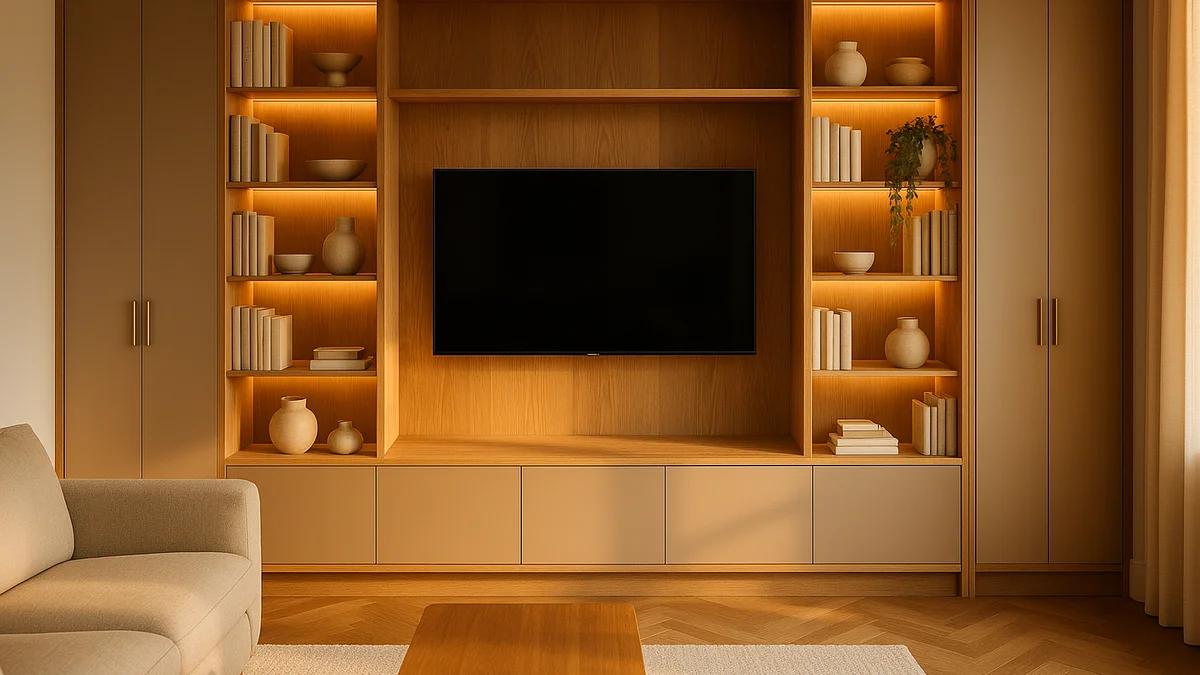
A full wall unit can combine TV space, cabinets, shelves, and drawers in one design. Closed cabinets hide cables, electronics, games, and media equipment. Open sections give decorative items a place to shine.
2. Open Shelving With Lower Cabinets
Open shelves suit books, plants, artwork, and decorative objects. Lower cabinets can hold toys, documents, and everyday clutter. This mix gives you storage without making the whole wall look heavy.
3. Built-In Book and Display Wall
Floor-to-ceiling shelving works well for books, photos, artwork, plants, and decorative pieces. Mixing them gives the wall a collected look. Leave some shelf space empty instead of filling every section.
4. Corner Wall Storage
Corners are often wasted. Corner shelving or a custom-fitted corner unit can turn that dead space into useful storage, especially in awkward living room layouts.
Wall Unit Storage Ideas for Bedrooms
Bedrooms need quiet storage for clothes, bedding, and personal items. The right wall unit keeps all of it close without crowding the room.
1. Floor-to-Ceiling Bedroom Storage
A full height unit uses every inch of the wall. It suits folded clothes, bedding, accessories, shoes, and seasonal items. Place rarely used items in the upper sections so everyday storage stays easy to reach. Knowing standard closet sizes like shelf depth and spacing also helps you size each section well.
2. Wall Unit Around the Bed
Storage can frame the bed. Think bedside shelves, overhead cabinets, small display niches, reading lights, drawers, and closed cupboards. This creates a built-in bedroom look and uses wall space that would otherwise stay empty.
3. Wardrobe and Open Shelf Combination
Closed wardrobe sections keep clothing and personal items out of sight. Open shelves beside them can hold books, accessories, décor, or things you grab daily. The mix keeps the wall practical and a little lighter.
4. Small Bedroom Wall Storage
In a compact room, go up instead of out. Vertical shelving, slim cabinets, wall-mounted shelves, and tall storage units all save floor space. Shelves above a desk and unused corners can add more room for belongings.
Open Shelves vs. Closed Cabinets: Which Is Better?
Open Storage | Closed Storage |
|---|---|
Easy to access | Keeps clutter hidden |
Good for décor | Better for personal items |
Makes items visible | Creates a cleaner appearance |
Can make a wall feel lighter | Useful for larger storage needs |
Open shelving and display shelves show off what you love and keep daily items handy. Closed cabinets and other concealed storage hide the mess and handle bulky belongings.
For most homes, a mix of both works best. Storage cabinets take care of the clutter, while open sections keep the wall from feeling heavy.
How to Plan a Wall Unit Before Installing One
A little planning prevents most storage regrets. Work through these four steps first.
Measure the Wall First
Note the wall width and ceiling height. Mark door openings, windows, electrical outlets, baseboards, and any heating or ventilation areas. If you are new to measuring closet space or wall, that guide shows how to take accurate numbers.
Decide What You Need to Store
Make a simple list before choosing a design. For a bedroom, think clothes, shoes, bedding, and accessories. For a living room, think books, electronics, games, décor, and media equipment.
Mix Storage Types
Combine shelves, drawers, cabinets, and hanging sections based on what you own. Folded items suit shelves. Small items suit drawers. Longer pieces need hanging space.
Think About Accessibility
Keep frequently used items within easy reach. Move seasonal or rarely used belongings to the higher sections.
How to Make a Wall Unit Look Stylish, Not Bulky
Good wall storage should feel like part of the room, not an oversized box.
- Avoid filling every shelf. Empty space gives the eye a rest.
- Mix open and closed sections for balance.
- Keep similar items together, such as books by size or baskets by color.
- Use a few decorative pieces instead of many.
- Add lighting to highlight display shelves.
- Match the finish and style to the rest of the room.
Common Wall Unit Storage Mistakes to Avoid
- Choosing storage before measuring. A unit that does not fit wastes money and space.
- Using too many open shelves. Everything stays visible, so clutter shows.
- Ignoring what you actually store. Design around real belongings, not a picture.
- Making every section the same size. Different items need different heights and depths.
- Forgetting accessibility. Daily items should never sit out of reach.
- Overloading shelves with décor. Too many objects make the wall feel crowded.
How to Choose the Right Wall Unit for Your Room
Start with a few simple questions:
- How big is the room, and how much wall is free?
- What do you need to store today, and in a few years?
- Do you want open display, closed storage, or both?
- What furniture is already in the room?
- Does the style suit your home, and does the budget work?
If the wall has unusual dimensions, or you need space for specific belongings, a custom storage solution can fit the room better than a standard piece.
Plan a Wall Unit Around Your Needs
The best wall unit storage ideas are not simply the ones that look good. They make a room easier to use and keep everyday belongings in order. Bedrooms often need space for clothing, bedding, and personal items. Living rooms usually need a mix of media storage, books, décor, and hidden storage.
If you want a unit planned around your space, professional help can save time and guesswork. We also serve homes in Yardley, Southampton, Newtown, Warrington, and Holland.
When you are ready to turn an empty wall into organized space, explore custom storage systems designed around your room, your belongings, and the way you live. A planned layout uses every inch well, keeps daily items easy to reach, and gives the wall a clean, finished look. Share your measurements and ideas, and we will help you shape a practical plan.
Frequently Asked Questions About Wall Unit Storage
1. Are wall units good for small bedrooms?
Yes. Vertical storage uses wall space without needing extra floor area. Tall units, slim cabinets, and wall-mounted shelves keep a small bedroom open.
2. What should I store in a living room wall unit?
Books, electronics, games, décor, media accessories, documents, and everyday items all fit well. Put the messy items behind doors.
3. Is open or closed storage better for a wall unit?
It depends on your priority. Choose open shelves for display and easy access, and closed cabinets for hiding clutter. Most rooms do best with both.
4. Can a wall unit be designed around a TV?
Yes. Cabinets, shelves, cable management, and display areas can all be built around the TV. This keeps wires hidden and the wall balanced.
5. How do I make a large wall unit look less bulky?
Mix open and closed sections, leave breathing room, and avoid overfilling shelves. Lighting and a matching finish also help it blend in.
6. Can wall units be customized for unusual wall sizes?
Yes. Custom storage can be designed around corners, windows, doors, sloped ceilings, or specific storage needs.