
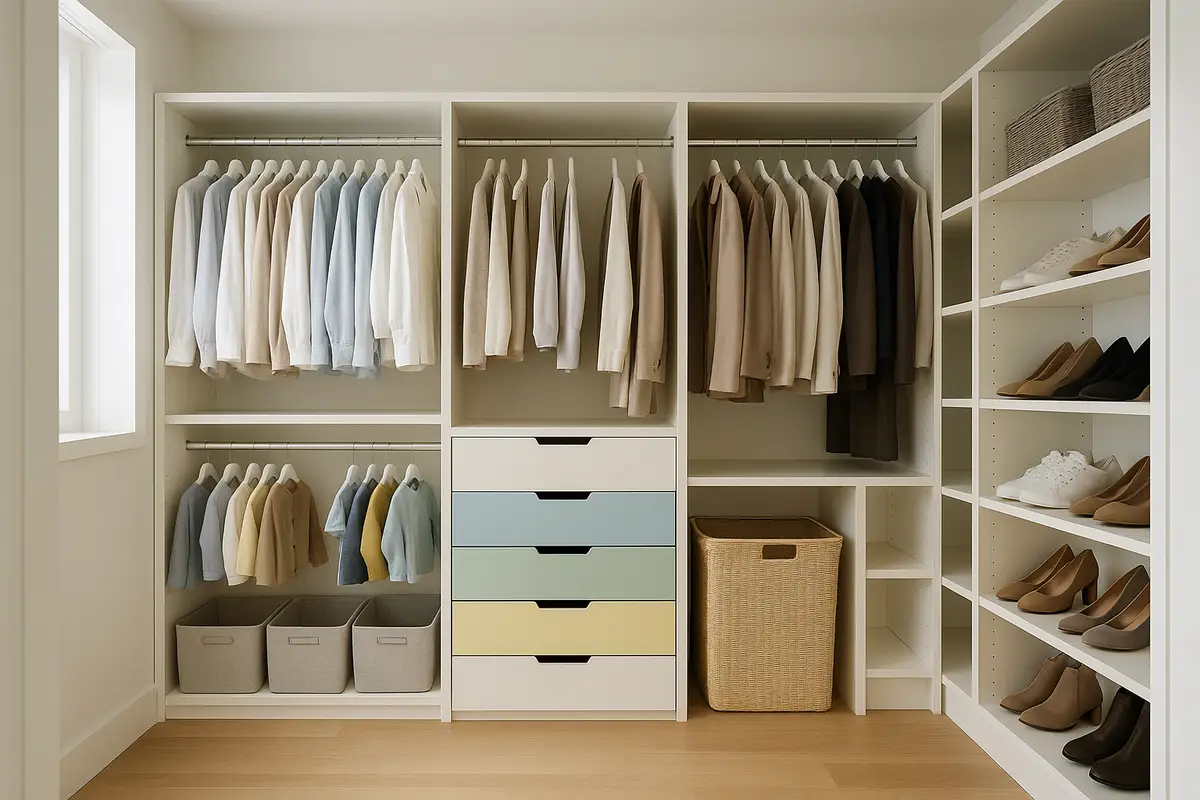
When several people share the same storage, mornings can feel like a race. Coats pile up, shoes wander off, and the things you reach for every day always seem to hide behind the things you barely use. For households with kids, partners, or roommates, a closet that works for one person rarely works for everyone. The good news is that a few well-chosen features can turn a crowded, cluttered space into one that keeps the whole family moving smoothly.
Below are the closet features that make the biggest difference in shared homes — along with practical reasons each one earns its place. If you want a setup designed around how your household actually lives, personalized storage built around your home is what brings these ideas together.
Why Shared Closets Need a Different Approach
A closet used by one adult can be optimized around a single routine. A shared closet has to juggle different schedules, heights, clothing sizes, and habits all at once. Without a plan, the most-used items get buried and the least-used items take up prime space. Designing for a busy family means thinking about who reaches for what, when they reach for it, and how to keep each person’s belongings from spilling into someone else’s zone.
Zoned Storage: Give Everyone Their Own Space
The single most effective feature for a shared closet is clear zoning. When each family member has a defined section, there’s far less daily friction — nobody has to dig through someone else’s clothes to find their own. Zoning works at any scale, from a couple splitting a primary closet to siblings sharing one wardrobe.
- Dedicated hanging sections sized to each person’s wardrobe.
- Labeled or color-coded drawers so kids know exactly where their things go.
- Lower rods and bins for children, higher zones reserved for adults.
Adjustable Shelving That Grows With Your Family
Kids outgrow clothes, hobbies change, and seasonal gear comes and goes. Fixed shelves lock you into one layout, while made-to-fit shelving lets you move tiers up or down as needs shift. A shelf that holds folded toddler clothes today can hold sports equipment or school supplies in a few years — no rebuild required. This flexibility is one of the biggest long-term savings a family closet can offer.
Double-Hang Rods and Vertical Layouts
Shared closets fill up fast, so using vertical height is essential. Double-hang rods effectively double the space available for shirts, jackets, and folded-over pants. Pairing a higher rod for adults with a lower rod for children also encourages kids to hang their own clothes, which builds independence and keeps the floor clear. Tall built-ins that reach toward the ceiling capture the seldom-used storage that wire racks usually waste.
Smart Accessories for Everyday Items
The details are what make a busy household run on time. Pull-out hampers keep laundry contained, divided drawers stop small items from becoming a tangle, and dedicated shoe shelves end the pile-up by the door. Built-in valet rods give everyone a spot to lay out tomorrow’s outfit. Choosing the right thoughtful add-ons and inserts often matters more than square footage — they’re what keep a closet organized after the first hectic week.
Kid-Friendly Features That Build Good Habits
A closet designed at a child’s level does more than save space — it teaches kids to put their own things away. Low hooks, open bins, and reachable rods turn cleanup into something a child can manage alone. If you’re working through taming the chaos in a child’s room, building these features in from the start pays off every single morning.
Making the Most of Compact or Tight Closets
Not every family has a sprawling walk-in to work with, and that’s perfectly fine. Corner shelving, slim pull-out racks, and full-height cabinetry can transform a modest closet into a high-capacity workhorse. There are plenty of smart approaches for compact spaces that prioritize the items you use most and tuck the rest neatly out of the way.
Keeping a Shared Closet Organized Long-Term
The best design still needs simple routines to stay tidy. A regular seasonal swap, a “one-in, one-out” rule for kids’ clothes, and clearly labeled zones prevent slow creep back into clutter. For more everyday tidiness strategies, small consistent habits beat occasional deep cleans every time.
Families planning a larger project may also want to explore a future guide on designing a dual primary closet for couples, which dives deeper into balancing two wardrobes in one shared footprint.
Ready to bring order to your shared spaces?
Every family’s routine is different, and a closet that works for yours starts with a design built around how you actually live — not a one-size-fits-all layout. Closets Creation offers free design consultations to help you plan a system that keeps kids, partners, and roommates organized without the daily scramble. Call us at (215) 872-2109 or reach out online to get started.
We proudly design and install custom family-friendly closet systems for households in Newtown, Richboro, Warrington, Holland, and Doylestown, along with the surrounding Bucks and Montgomery County communities. Wherever your family calls home, let’s design a shared closet system that actually works for everyone — schedule your free consultation today.
FAQs
1. How do you organize a closet for multiple people sharing the same space?
The key is zoning — giving each person a clearly defined section with their own hanging space, shelves, and drawers. Labeling or color-coding zones for kids, using higher rods for adults and lower rods for children, and keeping each person’s items separate all reduce the daily friction of a shared closet.
2. What closet features work best for kids?
Low hooks, open bins, and reachable rods let children put away their own clothes without help. Lower double-hang rods paired with adjustable shelving also let the closet grow with your child, so it doesn’t need to be redesigned every year as their needs change.
3. Are double-hang rods worth it in a shared closet?
Yes. Double-hang rods roughly double your usable hanging space by taking advantage of vertical height, which is especially valuable in shared closets that fill up fast. Pairing a higher rod for adults with a lower one for kids also makes the space more functional for everyone.
4. Can a small or compact closet still work for a busy family?
Absolutely. Features like corner shelving, slim pull-out racks, and full-height cabinetry make the most of limited square footage. The goal is prioritizing your most-used items with easy access while tucking less-used items neatly out of the way.
5. How do you keep a family closet organized long-term?
Good design only goes so far — simple routines matter too. A seasonal clothing swap, a “one-in, one-out” rule for kids’ clothes, and clearly labeled zones prevent clutter from creeping back in over time.