
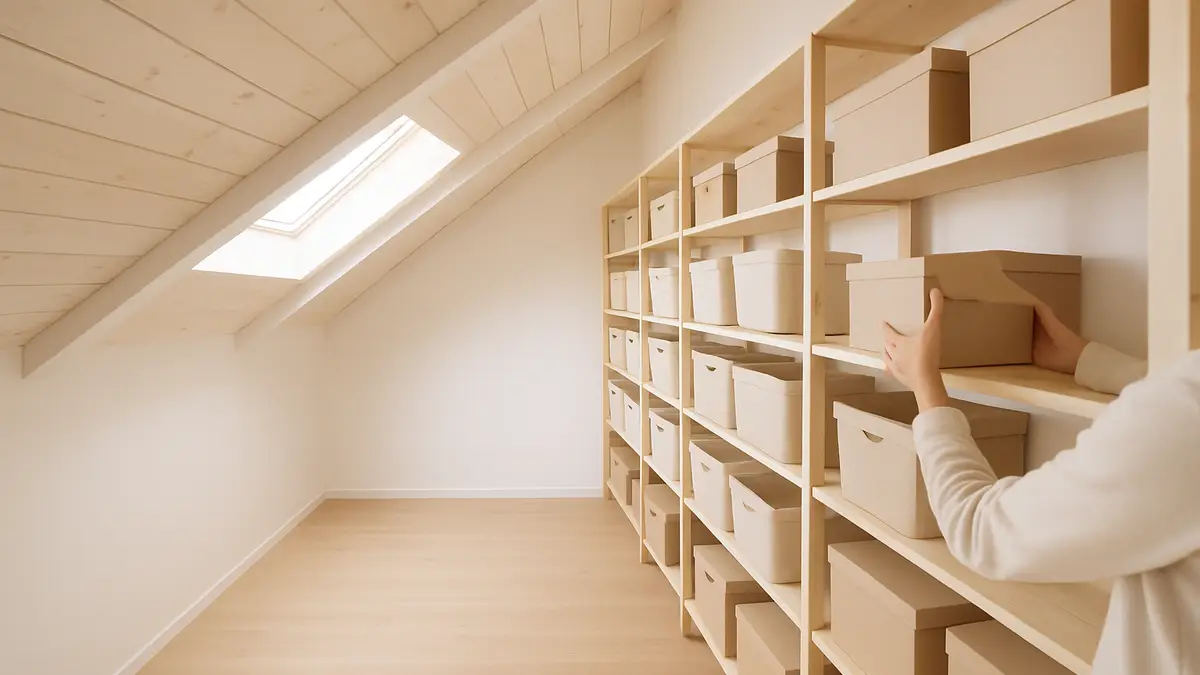
Most attics sit half-empty, holding a few dusty boxes and a lot of wasted potential. The quickest way to fix that is to combine safe flooring, sturdy shelving, and clear access with a layout that matches what you actually need to store — holiday decor, seasonal clothing, luggage, or keepsakes. With the right attic storage solutions, that awkward triangular space above your ceiling can become one of the most useful rooms in the house, often for less than the cost of a home addition.
What Is Attic Storage, and Why Does It Matter?
Attic storage refers to any system — flooring, shelving, bins, lighting, or built-in units — designed to make an attic safe and usable for storing household items. Unlike a garage or basement, an attic is often overlooked simply because it is harder to reach and easier to forget about.
Converting that space into organized storage matters for a few practical reasons. It frees up closets, garages, and spare rooms that are currently absorbing overflow items. It protects belongings from moisture and pests when done correctly, since a properly insulated and ventilated attic is far more stable than a damp basement. It also adds real value to a home, since appraisers and buyers both respond well to visible, well-organized storage. Many homeowners are surprised by the hidden benefits of organized storage spaces once clutter is out of the way, from lower daily stress to more usable square footage throughout the rest of the house. Most importantly, it turns a source of clutter anxiety into a predictable system where everything has a place.
Assess Your Attic Before You Start
Not every attic is ready for heavy storage right away. A short assessment now prevents safety issues and wasted money later.
- Check the floor joists. Standard ceiling joists are built to hold the ceiling below, not heavy boxes. Confirm whether your attic has load-bearing joists or needs reinforcement before adding weight.
- Look at insulation and ventilation. Poor airflow leads to trapped heat in summer and moisture buildup in winter, both of which damage stored items over time.
- Measure the usable height. Storage areas need at least a few feet of clearance to be practical; note where the roofline limits standing or bending room.
- Evaluate access. A pull-down ladder or narrow hatch will limit what you can carry up, which affects what kind of bins or furniture pieces make sense.
- Decide on your budget and timeline. A simple flooring-and-shelving update can be a weekend project, while a full conversion with lighting and staircases is a bigger investment.
Top Attic Storage Solutions to Consider
1. Reinforced Attic Flooring
Before anything else goes into the attic, the floor needs to be safe to walk and stack items on. Plywood or OSB decking panels, laid across the joists (with reinforcement where needed), create a stable surface and distribute weight evenly. This single upgrade turns an attic from a place you avoid into one you can actually use.
2. Built-In Shelving Units
Fixed shelving along the attic’s knee walls or gable ends makes the most of otherwise wasted vertical space. Sturdy, adjustable closet storage shelves are especially useful here, since they let you resize sections as your storage needs change — taller for bins, shorter for shoeboxes or small containers. Shelving also keeps items off the floor, which helps with both organization and pest prevention.
3. Overhead Storage Platforms
In attics with taller peaks, a platform installed above the main walking area can capture extra square footage without interfering with floor-level storage. These platforms work well for lightweight, rarely used items like holiday decorations or off-season sports gear that don’t need frequent access.
4. Custom Wood Shelving and Built-Ins
For homeowners who want a more finished look, custom wood shelving brings a level of durability and style that generic wire racks can’t match. Local specialists offering custom wood closet shelving can build units that follow the exact angles of a sloped attic roof, which maximizes usable space that off-the-shelf shelving would otherwise waste.
5. Labeled Bins and Totes
Clear, stackable bins with secure lids protect against dust, moisture, and pests far better than cardboard boxes. Labeling each bin by category or season — holiday, baby clothes, camping gear — means you’re never digging through five containers to find one item.
6. Cedar-Lined Storage Zones
For attics used to store off-season clothing or linens, a cedar-lined section naturally repels moths and adds a pleasant scent, without the chemical smell of mothballs. Even a single cedar-lined closet or trunk within the attic can protect delicate fabrics for years.
7. Attic Lighting and Clear Pathways
Good lighting is often the most overlooked storage accessory. A single pull-chain bulb rarely covers the whole space, leading to tripping hazards and items shoved into dark corners and forgotten. LED shop lights or battery-powered puck lights, combined with a clear central walkway, make the attic safer and far more likely to stay organized.
8. Sturdy Pull-Down Ladders and Stair Access
If your attic is used often, a fixed staircase or a heavy-duty pull-down ladder makes a bigger difference than almost any other upgrade. Easier access means less temptation to leave things in the hallway “just for now,” which is how clutter builds up in the first place.
Homeowners who want to see how these pieces come together in real spaces can browse finished attic and storage project photos for layout ideas before starting their own conversion.
How to Choose the Right Attic Storage Setup
The best combination of solutions depends on how the space will actually be used. This table breaks down common attic storage goals and the accessories that best support them.
Storage Goal | Best Solution | Notes |
Heavy or bulky items | Reinforced flooring + shelving | Confirm joist strength first |
Seasonal decor | Labeled bins on shelving | Keep near the access point |
Off-season clothing | Cedar-lined zone | Protects fabric from pests |
Frequent daily access | Stair access + lighting | Reduces trips and clutter |
Finished, visible storage | Custom wood shelving | Matches sloped roof angles |
Safety Considerations Worth Taking Seriously
Attics come with a few risks that flat storage rooms don’t. Weight limits matter — always confirm what the joists can hold before loading heavy boxes. Ventilation matters just as much, since blocking vents with stacked bins can lead to moisture problems that affect the whole roof structure. Finally, keep a clear path to the access point at all times; in an emergency, a blocked attic ladder or hatch is a real hazard, not just an inconvenience.
Style and Maintenance Tips
A functional attic doesn’t have to look purely utilitarian. Matching bin colors, labeling in a consistent font, and keeping walkways clear all make the space feel more like an extension of the home rather than a forgotten storage pit. It’s also worth revisiting the layout once or twice a year — many homeowners find that a seasonal attic reorganization checklist helps catch pest issues or moisture problems early, long before they become expensive repairs.
Planning ahead also pays off before a renovation even begins. Many homeowners describe the same regret once a project is finished — a list of storage features they wish they had added earlier during renovations, from extra outlets near the shelving to a wider access hatch. Thinking through an attic insulation upgrade guide before drywall goes up saves both time and money.
Transform Your Attic into Functional Storage
An unused attic is one of the easiest spaces in a home to turn into genuinely useful storage, as long as safety comes first and the setup matches how the space will really be used. From reinforced flooring to labeled bins and better lighting, small upgrades add up to a space that finally earns its keep. For homeowners ready to plan a full attic transformation, the team at Closets Creation can help design a system that fits the exact shape, height, and needs of the space.
Frequently Asked Questions
How much weight can a typical attic floor hold?
It depends on the joist size and spacing, but many older attics are only rated for light storage until reinforced. A contractor or structural inspection can confirm the safe load for your specific home.
What is the best flooring option for attic storage?
Plywood or OSB decking panels are the most common choice, since they’re affordable, easy to install over joists, and strong enough for typical household storage items.
Why does attic ventilation matter for stored items?
Poor ventilation traps heat and moisture, which can warp wood, damage electronics, and encourage mold or pest activity in stored boxes and furniture.
How do I keep pests out of attic storage?
Sealing entry points, using sturdy plastic bins instead of cardboard, and adding cedar-lined sections for fabric items are all effective ways to discourage pests.
What should never be stored in an attic?
Items sensitive to temperature swings — like candles, electronics, photographs, wine, and certain medications — generally don’t hold up well in an attic’s heat and cold extremes.
Who should install attic flooring and shelving?
Simple shelving and flooring kits are manageable as a DIY project for many homeowners, but attics with structural concerns or steep rooflines are safer left to a professional.
How much does an attic storage conversion typically cost?
Costs vary widely based on flooring, shelving, lighting, and access upgrades, ranging from a few hundred dollars for a basic flooring-and-shelving update to several thousand for a full conversion.
What is the easiest first step to organize an attic?
Start by sorting everything currently stored there into keep, donate, and discard piles before adding any new shelving or bins — decluttering first prevents paying to store things you don’t actually need.