
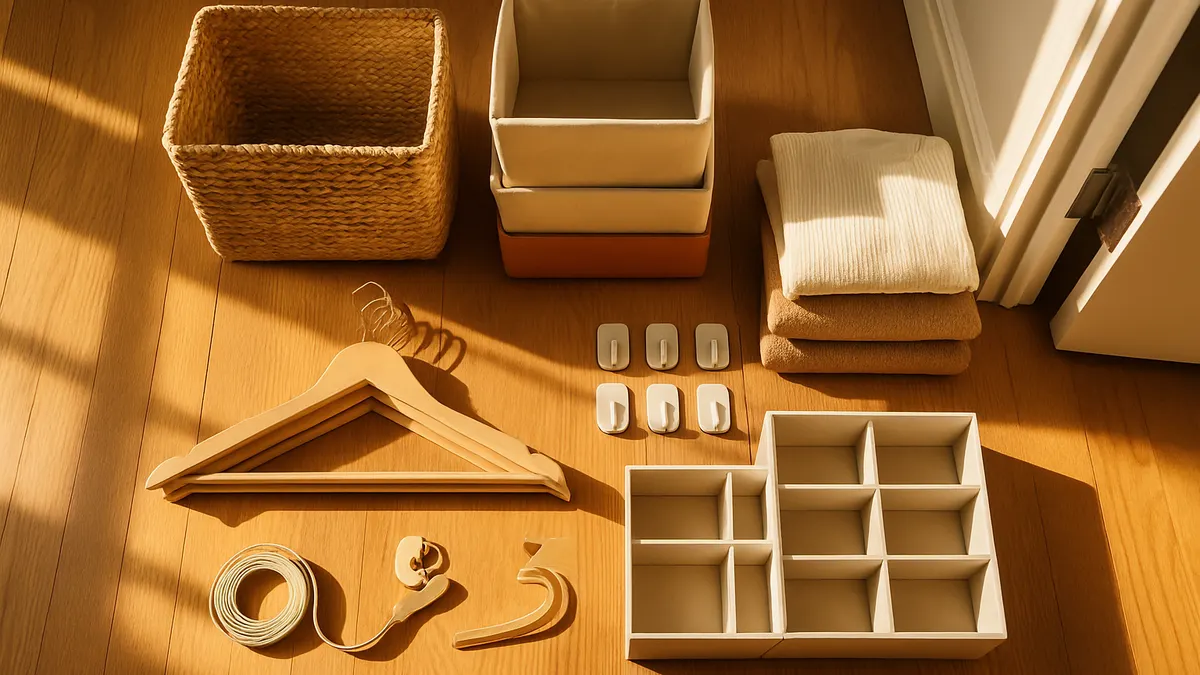
If your closet feels like a daily struggle, you are not alone. Clothes pile up, shoes get lost, and shelves turn into catch all spots for anything you do not know where else to put. The good news is that you do not need a full remodel or an expensive system to fix this. A simple DIY closet organizer, built from a few smart choices and some inexpensive materials, can make a real difference. This guide walks through practical, budget friendly ways to organize your closet using what you already have or can pick up cheaply.
Start With Decluttering and Measuring, Not Shopping
Before you buy a single bin or rod, take everything out of your closet. This step feels tedious, but it is the foundation of any good DIY closet organization plan. Once your closet is empty, sort items into three simple piles: keep, donate, and toss. Be honest about what you actually wear or use. Clothes that no longer fit, shoes you have not touched in years, and mystery items on the top shelf are usually easy decisions.
After decluttering, measure your closet. Note the width, depth, and height, along with the placement of the existing rod and any built in shelves. Write these numbers down. Skipping this step is one of the most common mistakes people make. It is easy to buy a great looking bin or rack online, only to find it does not fit once it gets home. Measuring first means every dollar you spend goes toward something that actually works in your space.
Practical DIY Closet Organization Ideas
Once your closet is decluttered and measured, you can start building a system that fits how you actually get dressed. These ideas use simple materials and basic tools, so most homeowners can tackle them in a weekend.
Add a Second Hanging Rod
If your closet has one rod that runs the full height, you are wasting a lot of hanging space. Most shirts, folded pants, and jackets only need about three feet of vertical room. Installing a second rod below the first one instantly doubles your hanging capacity. You can buy an adjustable closet rod bracket kit at most hardware stores for a low cost, and it usually installs with just a drill and a level. This single change is one of the easiest ways to add real hanging space without touching the rest of the closet.
Use Shelf Dividers
If you have shelves for sweaters, jeans, or linens, shelf dividers keep those stacks from toppling over every time you pull one item out. You do not need to buy specialty dividers. Sturdy cardboard, cut to size and covered with contact paper, works just as well as a store bought version. Dividers turn one messy pile into several tidy sections, which makes it much easier to see what you have.
Maximize Vertical Space
Most closets have unused space near the ceiling. This is prime real estate for items you do not need every day, like seasonal clothing, extra bedding, or luggage. Add a simple shelf near the top of the closet, or use stackable bins that are labeled clearly so you know what is inside without opening each one. Thinking in terms of vertical closet storage, rather than just floor space, is one of the fastest ways to maximize closet space without spending much. If your closet is narrow or oddly shaped, looking at layout ideas built around vertical storage can help you see options you might not have considered.
Create Simple Shoe Storage
Shoes tend to end up in a pile on the closet floor, which wastes space and makes a mess. A low cost over the door shoe organizer solves this without taking up any floor space at all. If you prefer something sturdier, a few wire shelves or wooden slats installed at an angle create a simple shoe rack that keeps pairs visible and easy to grab. Even stacking shoes in clear bins under hanging clothes is a step up from a floor pile.
Repurpose Bins and Baskets
You do not need matching designer bins to create closet storage solutions that work. Baskets from a home goods store, old shoe boxes covered in fabric, or plastic bins you already own can all be repurposed for closet organization. Use them to group small items like scarves, belts, or hats. Label each bin so you always know where things belong, which makes it far easier to put items back after laundry day instead of tossing them onto a shelf.
Use the Back of the Closet Door
The back of your closet door is often completely empty, yet it is one of the most useful spots for extra storage. An over the door hook rack can hold robes, bags, or accessories. A hanging pocket organizer works well for smaller items like jewelry, sunglasses, or cleaning supplies if it is a linen closet. This space costs almost nothing to use and adds storage without taking up any actual closet floor or shelf space.
Create an Easy to Maintain Clothing System
An organized closet only stays organized if the system is easy to follow every day. Group clothing by type, then by color, so outfits are easier to put together and misplaced items stand out quickly. Keep frequently worn pieces at eye level and within easy reach, while off season clothing moves to higher shelves or under bed bins. The simpler the system, the more likely you are to keep it up over time.
Organizing a Small Closet on a Budget
Small closets come with their own set of challenges, but the same budget friendly principles still apply. The key is making every inch count.
Slim, matching hangers save more space than you might expect, since they take up far less width than bulky plastic ones. A double hanging rod works especially well in small closets because most clothing does not need the full height of the closet to hang properly. Corner space is often wasted in small closets, so a slim shelf unit tucked into an unused corner can hold folded items without blocking the door or rod.
If you are working with a tight reach in closet or a narrow layout, it helps to look at small closet ideas that are designed specifically around limited square footage, since the layout choices that work in a large walk in closet often do not translate well to a smaller space.
Mirrors on the inside of the door, light colored bins, and good lighting also make a small closet feel less cramped, even though they do not add physical storage. Sometimes the goal is not just more space, but making the space you have feel usable and calm.
When DIY Organization May Not Be Enough
DIY closet organizer projects solve a lot of problems, especially for closets that just need better use of existing space. But there are times when simple fixes reach their limit. If your closet shelves are sagging, warped, or too flimsy to hold what you actually own, no amount of bins or rod adjustments will fix that underlying issue. Wire shelving that bends under weight or particle board that is falling apart is a sign that the closet needs a sturdier foundation before organization tools can do their job.
Homes with unusually shaped closets, very low ceilings, or awkward corners can also outgrow basic DIY fixes. In these cases, looking into durable closet shelving built to fit the actual dimensions of your space can save you from repeating the same DIY project every year as temporary solutions wear out. It does not mean giving up on a budget friendly approach entirely, but it does mean recognizing when a stronger, better fitted structure will serve you longer than another quick patch.
Get Help When You Need It
If you have decluttered, measured, and tried the ideas above but your closet still feels like it is fighting you, it may be time for a sturdier setup. For homeowners looking for closet storage shelves, working with a team that measures and builds shelving to fit your exact space can turn years of DIY patches into one lasting solution.
We also work with homeowners in Yardley, Feasterville, Warminster, and Newtown who are ready to move past temporary fixes and into shelving built to last.
Frequently Asked Questions
What is the cheapest way to organize a closet?
The cheapest way is to declutter first, then reuse items you already own, like boxes, baskets, and bins, before buying anything new. Adding a simple second rod or shelf dividers made from cardboard also costs very little compared to full organizer kits.
How do I organize a small closet with no extra space?
Focus on vertical space and the back of the door first. Slim hangers, a double rod, and an over the door shoe organizer can free up a surprising amount of room without adding any new shelving.
Do I need special tools for a DIY closet organizer?
Most projects only need a drill, a level, a tape measure, and a screwdriver. Adding a second rod or hanging shelves usually does not require anything more advanced than basic hand tools.
How often should I declutter my closet?
A light declutter every three to four months keeps things manageable, with a deeper sort at the start of each season when you switch out clothing for the weather.
What if my closet shelves are too weak to hold my stuff?
If shelves sag or feel unstable under normal weight, that is usually a sign the existing shelving needs to be replaced rather than added to. A sturdier, properly sized shelf will hold up better long term than adding more items to a weak structure.
How do I keep an organized closet from becoming messy again?
Give every item a designated spot, and put things back right after wearing or washing them rather than setting them aside for later. A simple system that is easy to follow is much easier to maintain than a complicated one.