
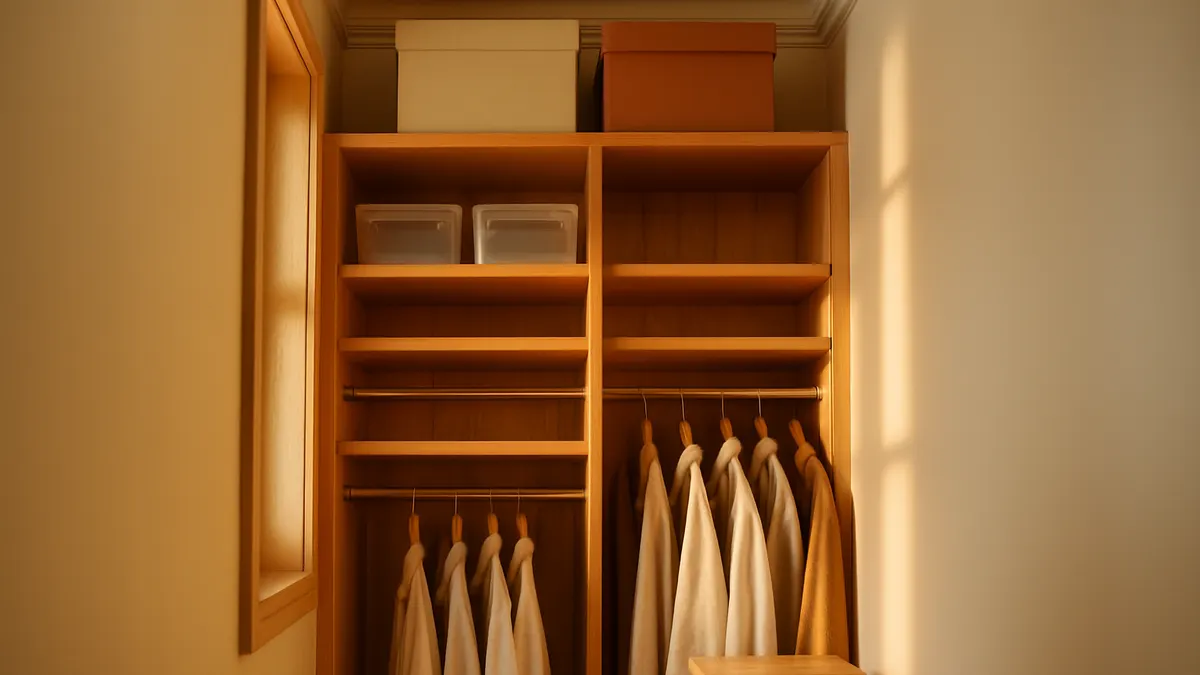
To use vertical space and maximize storage, extend shelving to the ceiling, add a second hanging rod above or below the existing one, and use over-the-door organizers and stackable bins for the areas in between. Most closets waste two to three feet of usable height above eye level — reclaiming it adds storage without expanding the room’s footprint.
Why Vertical Space Is Often Overlooked
People plan storage the way they walk through a room, at eye level and below. A shelf goes in at a comfortable reach, and the two or three feet above it stay empty for years. The same pattern shows up in kitchens, above cabinets, in mudrooms, above hooks, and in narrow hallway closets with tall ceilings and short shelving.
None of this is anyone’s fault. Floor space is what you see and step around every day, so it feels like the obvious place to solve a storage problem. Wall height is easy to forget because it does not get in anyone’s way. Once you notice it, that unused height can hold quite a bit without adding a single box to the floor.
6 Practical Ways to Use Vertical Space for More Storage
1. Install Shelves Higher on the Wall
If your closet rod ends several feet below the ceiling, that empty zone above it is still usable space. A shelf mounted in that gap can hold items you do not need on a daily basis, without taking up any new floor area.
Good candidates for higher shelves include:
- Seasonal clothing, like heavy coats in summer or shorts in winter
- Extra bedding and pillows
- Luggage
- Holiday decorations
- Items you only reach for a few times a year
Keep the things you use often lower down, closer to shoulder or waist height. Save the higher shelves for items that can sit untouched for weeks at a time. For a few more approaches to this kind of layout, these closet storage ideas are worth a look.
2. Use Floor-to-Ceiling Storage
Many closets and storage areas stop well short of the ceiling, leaving a gap that never gets used. Building storage that runs the full height of the wall, instead of stopping at a standard cabinet height, turns that gap into something functional.
This works well in closets, pantries, laundry rooms, and garages. Plan it out ahead of time so you still have room to move and reach items comfortably. Floor-to-ceiling storage should make a space more useful, not harder to use.
3. Add a Second Hanging Rod
A single hanging rod usually leaves several feet of open space beneath it. Adding a second rod below the first puts that gap to work, especially for shorter items that do not need a full-length hang.
A double rod setup works well for:
- Shirts and blouses
- Jackets
- Folded pants
- Children’s clothing
Longer items, like dresses, suits, and coats, still need one taller section to hang properly. The idea is not to replace your hanging space. It is to use the vertical distance between two shorter rods instead of leaving it empty.
4. Make Use of the Space Above Cabinets
The gap above kitchen or bathroom cabinets often gets ignored, or worse, turns into a dust-collecting catchall. With the right containers, that space can hold items you do not need to handle every day.
Baskets, labeled bins, or closed boxes all work well here. Since this space sits higher up, keep what you store there lightweight and easy to identify at a glance. Heavier items belong lower down, where they are easier and safer to lift.
5. Use Wall-Mounted Hooks and Racks
Not everything needs a shelf. Hooks, pegboards, and wall-mounted racks can move everyday items off the floor and out of drawers, freeing up space elsewhere.
Practical uses include:
- Bags and totes
- Hats
- Belts and scarves
- Cleaning tools
- Small accessories
The goal here is not just organizing what you own. It is putting wall height to use that would otherwise sit empty.
6. Choose Adjustable Storage
Storage needs change over time. A closet built around a toddler’s clothes will not fit the same way once that child is a teenager. Adjustable shelving lets you raise or lower sections as your needs shift, instead of locking you into one layout.
This matters just as much for vertical storage as it does for width. Being able to move a shelf up or down means you can plan for taller boots one season and shorter folded items the next. If you are planning something meant to last, shelf material options can also affect how well shelving holds up under repeated changes.
How to Keep Vertical Storage Easy to Access
Using more height does not mean filling every inch of it. There is a difference between maximum storage and storage you will actually use. A shelf packed to the ceiling with unlabeled boxes is not more useful. It is just harder to deal with.
A few habits keep vertical storage practical:
- Keep frequently used items at eye level or below
- Save higher shelves for seasonal or rarely used things
- Use clear bins or add labels so you are not guessing what is inside
- Keep a small step stool nearby for safe, easy access
- Avoid placing heavy items where they are hard to lift down
- Leave enough clearance to pull boxes out without wrestling with them
Good vertical storage should make your space easier to manage, not create a new pile you avoid dealing with. Part of this comes down to better closet visibility, so you can actually see what you have stored instead of digging through it.
Common Mistakes to Avoid With Vertical Storage
- Filling every inch without a plan. More storage does not automatically mean better storage.
- Putting heavy items too high. Heavy boxes belong lower, where they are safer to lift down.
- Making shelves too deep. Deep shelves can hide items behind other items.
- Ignoring visibility. Storage that is hard to see often gets forgotten or duplicated.
- Forgetting daily habits. Items you use often should not be stored somewhere hard to reach.
- Choosing fixed storage without thinking ahead. Needs change, so some flexibility helps.
When Custom Vertical Storage Makes Sense
Standard shelving works fine in a lot of homes, but some spaces do not fit a standard size. Unusually tall ceilings, narrow closets, awkward corners, or sloped ceilings can all leave gaps that off-the-shelf storage does not handle well.
Custom storage makes sense when you want shelving built around the exact height and shape of your space, rather than forcing a standard unit into a room it was not designed for. This is especially useful in homes with limited floor space, where every inch of height matters more. If you are considering this route, custom closet shelves can be designed around your ceiling height, closet shape, and the items you actually need to store, rather than a generic layout.
Make Every Inch of Height Work for You
You do not always need a bigger room to get more storage. Often, you just need to use the space you already have more effectively. Taller shelving, floor-to-ceiling storage, a second hanging rod, wall-mounted hooks, and adjustable shelving can all add real storage without touching your floor plan.
The best approach is to plan around how you actually use your space, not just how much you can fit into it. Homeowners in Richboro, Holland, Warminster, and Newtown dealing with tight closets or awkward layouts often find that a closer look upward, with help from Closets Creation, solves more problems than adding more furniture ever could.
Frequently Asked Questions
Why is vertical space important for storage?
Vertical space adds storage without expanding the footprint of a room. Most homes have several feet of usable height above shelves, rods, and cabinets that could be holding items instead of sitting empty.
What areas of a home benefit most from vertical storage?
Closets, kitchens, pantries, laundry rooms, garages, and mudrooms usually have unused wall height above existing shelves, cabinets, or hooks that can be turned into extra storage.
How can shelves take better advantage of wall height?
Installing shelves higher on the wall, above existing storage, or running shelving from floor to ceiling puts height that would otherwise sit empty to work for less frequently used items.
How can hanging space be doubled in a closet?
Adding a second hanging rod below the first makes use of the vertical gap beneath shorter clothing, such as shirts, jackets, and folded pants, while a single taller section still handles dresses and coats.
What should be stored on higher shelves?
Seasonal clothing, extra bedding, luggage, holiday items, and anything used only a few times a year are good fits for higher shelves, while everyday items should stay within easy reach.
How can vertical storage stay easy to access?
Keep frequently used items at eye level, save higher spots for rarely used things, label containers clearly, and keep a step stool nearby so higher storage never becomes a hassle.
What mistakes should homeowners avoid with vertical storage?
Common mistakes include filling every inch without a plan, placing heavy items too high, choosing shelves that are too deep, and storing daily items somewhere hard to reach.
When does custom vertical storage make sense?
Custom storage is worth considering for tall ceilings, narrow closets, sloped ceilings, or awkward corners where standard shelving does not fit the space well.