
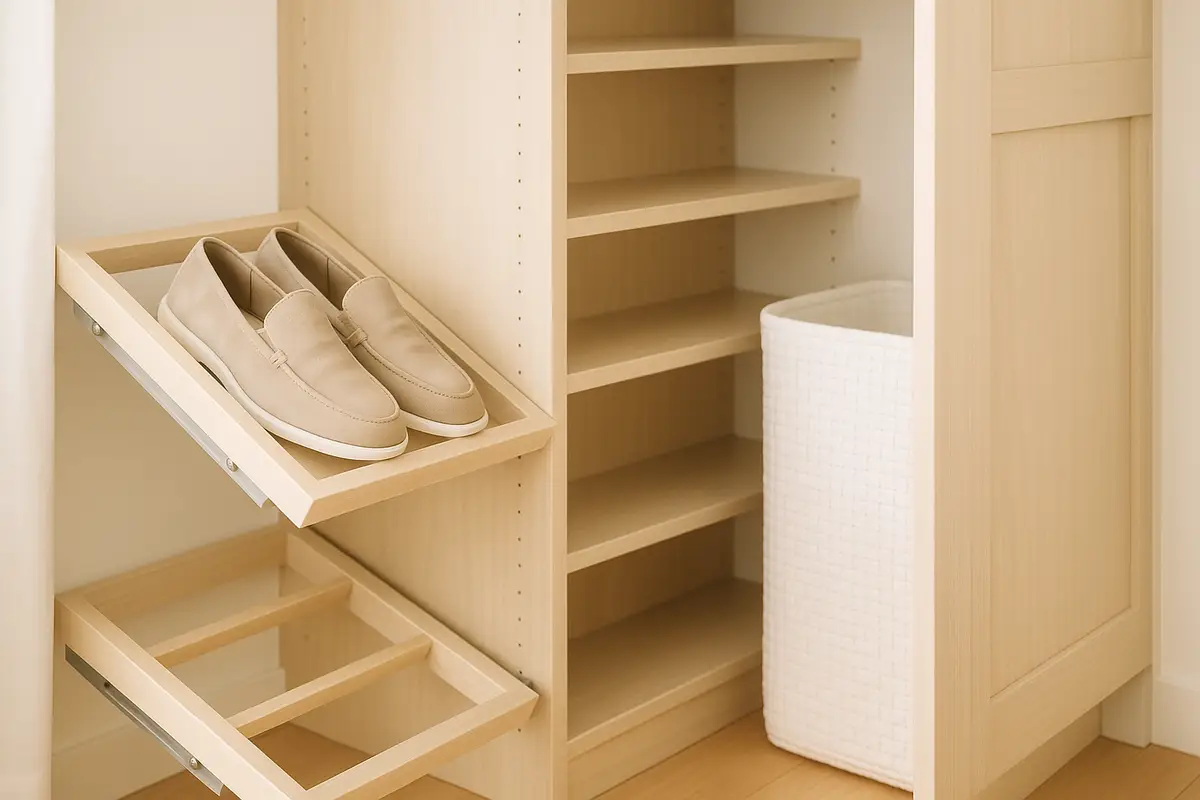
A narrow walk-in closet has a reputation it does not deserve. People assume that a slim footprint means cramped mornings, overflowing shelves, and clothes you forget you own. In reality, a long, skinny closet can be one of the easiest spaces to organize well, because every wall is within arm’s reach and nothing gets lost in a deep, awkward corner. The secret is not more square footage. It is a smart layout that treats height, depth, and walkway width as deliberate design choices rather than afterthoughts.
Start With the Shape of Your Space
Before choosing shelves or rods, look at how your closet is shaped. Most narrow walk-ins fall into one of two categories: a single-wall layout where storage runs along one side, or a galley layout where storage lines both walls with a walkway down the middle. Knowing which one you have shapes almost every decision that follows.
For very tight rooms, a single-wall plan often works best because it keeps the opposite wall completely clear, which makes the space feel wider and easier to move through. If your closet is closer to a hallway in shape, the kind you might also see in shallow single-wall configurations, borrowing those same shallow-depth principles keeps everything visible and within reach.
Build Up, Not Out
The single most effective move in a narrow closet is to use vertical space all the way to the ceiling. Floor-to-ceiling storage doubles your capacity without widening the room by a single inch. Lower zones handle everyday items, the middle holds hanging clothes, and the top shelf stores seasonal or rarely used pieces.
A few ways to take advantage of height:
- Run shelving up to the ceiling and reserve the highest shelf for off-season storage.
- Use double-hang rods for shirts, jackets, and folded-length items to fit twice as much in the same wall.
- Add a single long-hang section for dresses and coats so nothing drags or wrinkles.
When you plan upward, vertical shelving systems let you adjust shelf heights as your wardrobe changes, so the layout grows with you instead of locking you into one configuration.
Keep the Walkway Honest
In a narrow walk-in, the walkway is sacred. A comfortable path needs roughly 24 to 36 inches of clear floor space so you can stand, turn, and pull open drawers without bumping into the opposite wall. When the room is tight, shallow cabinetry is your friend. Twelve to fourteen inches of depth is usually enough for folded clothes and most hanging garments, and trimming a few inches off your shelving depth can give the walkway exactly the breathing room it needs.
Resist the urge to cram storage onto both walls if the result is a path you have to shuffle through sideways. A leaner plan you enjoy using beats a packed closet that feels claustrophobic.
Mix Open and Closed Storage
Narrow closets feel best when they balance what you can see with what you tuck away. Open shelving and exposed rods keep frequently used items visible and quick to grab, while drawers and bins hide the clutter that would otherwise make a slim room feel busy.
- Use open shelves for shoes, folded sweaters, and handbags you reach for often.
- Add a few drawers near the center for socks, accessories, and small items.
- Choose clear bins for the top shelf so you can identify contents at a glance.
If you are weighing how much to hide versus display, our roundup of fresh organization inspiration shows how the right mix changes the feel of a compact room.
Light It Like a Room, Not a Closet
Lighting is the most overlooked layout decision in a narrow space. A single dim bulb leaves the far end in shadow and makes the closet feel like a tunnel. Layered lighting solves this instantly. A ceiling fixture provides general brightness, while LED strips under shelves or along the rods wash light onto your clothing so colors read true and corners stay usable.
We are also planning a dedicated guide to closet lighting for narrow spaces, which will dig into fixture placement, color temperature, and motion-sensor options for tight rooms.
Let Custom Design Solve the Tight Corners
Off-the-shelf kits are built for average rooms, and a narrow walk-in is rarely average. This is where fully personalized storage systems earn their keep. A custom plan accounts for an odd angle, a sloped ceiling, or a window that interrupts a wall, turning the parts of the room most people waste into usable storage.
The same goes for shelving. Made-to-measure shelving lets you set exact depths and spacing for your specific items, so a shallow wall holds shoes perfectly and a deeper section fits folded denim without wasted air above each stack.
Before you finalize anything, it helps to review the common design missteps worth sidestepping, and to browse real tight-footprint layout examples so you can picture how the pieces come together in a room like yours.
A Quick Layout Checklist
- Pick a single-wall or galley plan based on your room’s width.
- Reach the ceiling with adjustable, full-height storage.
- Protect at least two feet of clear walkway.
- Balance open shelving with a few closed drawers.
- Layer your lighting so no corner sits in shadow.
As a future resource, we will also publish a comparison of single-sided versus galley closet layouts and a breakdown of durable closet materials and finishes to help you choose surfaces that last.
Bringing It All Together
A narrow walk-in closet does not have to feel like a compromise. When you build upward, keep the path clear, balance open and hidden storage, and light the space properly, even the slimmest room becomes a place you look forward to using each morning. The right layout makes your wardrobe easier to see, reach, and keep tidy.
If you are ready to map out a layout that fits your exact dimensions, a professional design consultation is the fastest way to get there with no guesswork.