
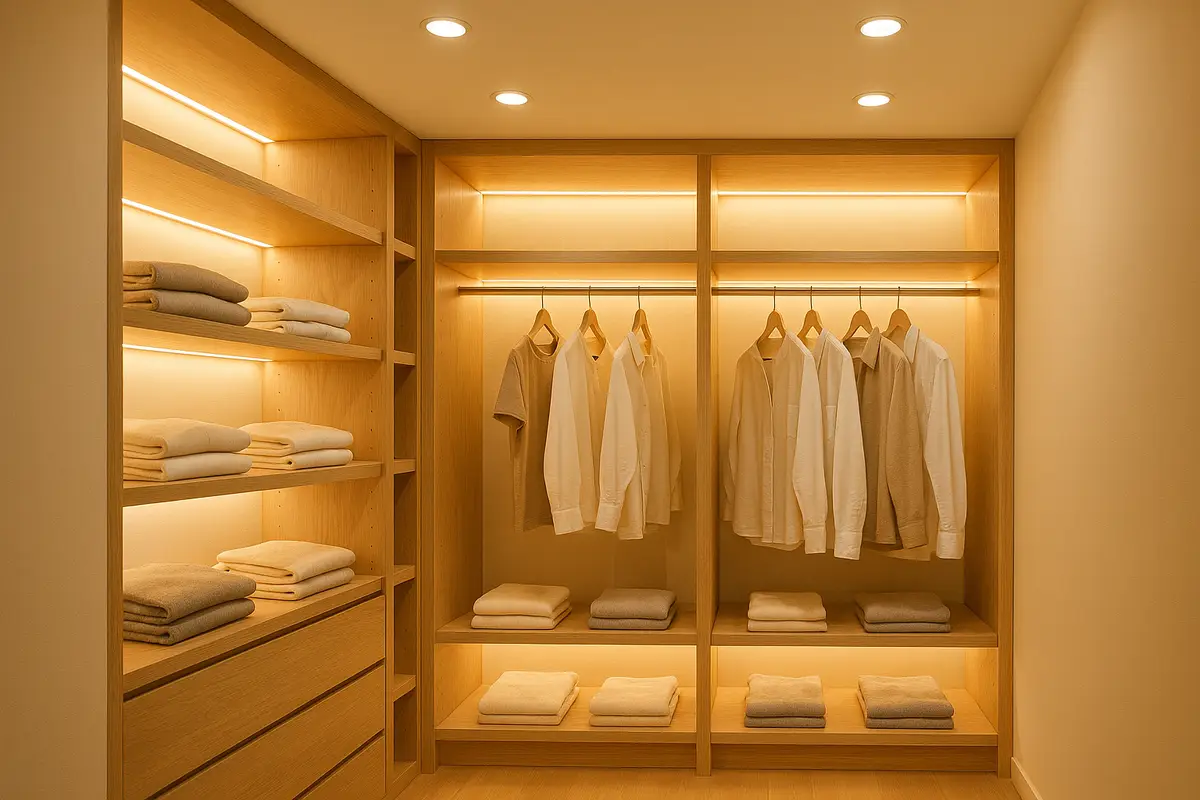
Most people pour their energy into shelving layouts, drawer dividers, and hanging rods when they plan a closet, then treat lighting as an afterthought. Yet the way a closet is lit shapes how it feels every single morning and how easily you can actually use it. A dim, shadowy closet makes even a beautifully organized space feel cramped and frustrating. A well-lit one feels open, calm, and almost like a private dressing room. Lighting is the quiet detail that turns ordinary storage into a space you look forward to walking into.
Why Closet Lighting Deserves More Attention Than It Gets
Think about how often you reach into your closet in the early morning or late evening, when natural light is weak. A single overhead bulb tucked behind the door casts long shadows across your shelves and hides half of what you own. You end up squinting, guessing at colors, and pulling clothes into the hallway just to see them properly.
Good lighting solves all of that. It does not simply brighten the room; it changes how the entire space works for you. When light is placed thoughtfully, your closet becomes easier to navigate, your belongings become easier to find, and the room itself feels larger and more inviting.
How the Right Lighting Transforms the Feel of Your Closet
Setting the Mood and Atmosphere
Lighting sets the emotional tone of a room, and closets are no exception. Soft, warm light creates a cozy, boutique-like atmosphere, while brighter, cooler light feels crisp and energizing. The temperature and intensity you choose can make a walk-in feel like a serene retreat or a sleek personal showroom.
Layering different light sources is one of the easiest ways to elevate that feeling. Combining overhead fixtures with accent lighting along your shelves gives a closet depth and dimension. If you want to see how lighting fits into the bigger picture, browsing some fresh design inspiration can help you picture the finished look before any work begins.
Making Colors and Fabrics True to Life
Have you ever picked an outfit in your closet only to step outside and realize the colors clash? That usually comes down to poor lighting. Bulbs with a high color rendering index show fabrics, leathers, and accessories in their true shades, so what you see in the closet matches what you see in daylight. This small upgrade saves time and removes a surprisingly common daily frustration.
How Lighting Boosts Everyday Functionality
Seeing Everything at a Glance
A closet only works if you can find what you need quickly. Bright, even illumination across well-planned shelving tiers makes every item visible at a glance, from folded sweaters on the top shelf to shoes near the floor. No more digging through dark corners or forgetting about pieces you cannot see.
Reducing Eye Strain and Morning Frustration
Good light also reduces eye strain, especially during those rushed early hours. When the space is evenly lit, your eyes are not constantly adjusting between bright and shadowy areas. That comfort matters more than people expect, turning a hectic morning routine into something smoother and calmer.
Popular Closet Lighting Options Worth Considering
There is no single right answer for closet lighting. The best choice depends on your space, your habits, and the look you are after. Here are the options homeowners reach for most often:
- Recessed ceiling lights — a clean, built-in look that provides broad, even coverage without taking up any usable space.
- LED strip lighting — flexible strips that tuck under shelves or along rods to wash light exactly where you need it.
- Motion-sensor lights — hands-free convenience that switches the closet on the moment you step inside.
- Puck lights — small, focused fixtures ideal for highlighting display areas or accessory sections.
- Backlit panels and rods — a premium, modern touch that makes a closet feel like a luxury showroom.
If you are torn between energy use and brightness, a detailed LED vs. traditional closet bulb comparison guide can help you weigh the trade-offs before you commit.
Smart Placement Tips for Better Results
Where you put the light matters as much as the type you choose. A few simple principles go a long way:
- Position light sources above and slightly in front of shelving so the beams fall onto your items rather than behind them.
- Add accent lighting inside deep or corner sections that a single overhead fixture tends to miss.
- Use warm tones in dressing areas and cooler tones where accurate color matters most.
- Keep switches or sensors within easy reach of the entrance.
If you are mapping all of this out on your own, our walkthrough on planning your own closet layout explains how the pieces fit together so lighting and storage work as one. A simple closet lighting installation and cost breakdown is also worth reviewing if budget is a deciding factor.
Pairing Lighting With Thoughtful Closet Design
Lighting reaches its full potential when it is built into the plan from the start rather than added at the end. When fixtures, shelving, and materials are designed together, the result feels cohesive instead of patched together. A storage system built around your daily routine can position lights exactly where your habits call for them.
Materials play a role too. Light reflects beautifully off the warmth of natural timber surfaces, adding a richness that painted or laminate finishes cannot quite match. Choosing the right fixtures alongside the right materials is part of a thoughtful design process that ties the whole space together.
Lighting becomes even more important in smaller footprints, since compact walk-in spaces rely on good illumination to feel open rather than boxed in. A few well-placed fixtures can make a modest closet feel noticeably more spacious. For those who want full automation, a motion-sensor and smart closet lighting setup is the natural next step.
The Bottom Line
Closet lighting is far more than a finishing touch. It influences how your space feels the moment you walk in and how smoothly it serves you every day. By choosing the right fixtures, placing them with intention, and pairing them with a smart design, you can turn an overlooked corner of your home into one of its most pleasant and practical spaces.