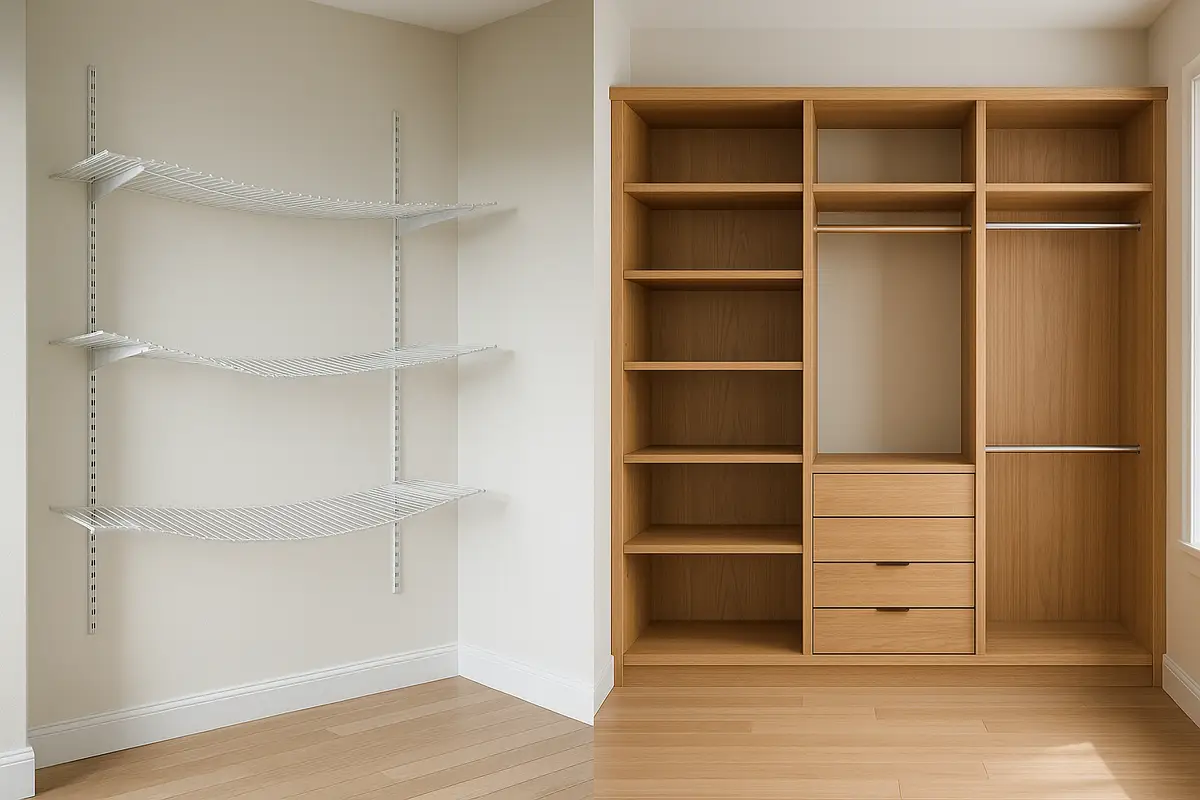
Generic closet systems fail families because they’re built for an average home, not a growing household. Fixed shelf widths, rigid rod heights, and thin materials can’t adapt as kids age, wardrobes shift, and belongings pile up — so most boxed kits sag, run out of space, or need replacing within a few years. A custom-built closet solves this by designing around your family’s actual routines, room dimensions, and future needs from the start.
In this guide, we will look at why mass-produced storage so often disappoints busy households, what those systems overlook, and how a thoughtfully planned setup keeps a family organized for the long haul.
The Appeal and the Letdown of One-Size-Fits-All Storage
Standardized closet kits are everywhere because they are affordable and easy to grab off a shelf. The pitch is simple: buy a box, follow the instructions, and enjoy a tidy closet by the weekend. For a single person in a studio apartment, that might even hold true for a while.
Families are a different story. A household closet is not a static space; it changes constantly as children grow, seasons turn, and routines evolve. A fixed-dimension kit cannot keep pace with that movement. The shelves sit where the manufacturer decided, the rods hang at heights that suit no one in particular, and the whole arrangement assumes your walls, ceilings, and clutter all match the diagram on the box. They rarely do.
Common Reasons Generic Systems Break Down for Families
When a prefab system stops working, it usually is not a single dramatic failure. It is a series of small frustrations that pile up. Here are the issues we see most often:
- Wasted vertical and corner space. Boxed kits are built to common widths, leaving awkward gaps near the ceiling and in corners where a lot of usable storage simply disappears.
- Rigid configurations. Most kits offer one or two layouts. If your family needs more hanging space this year and more shelving next year, you are stuck.
- Flimsy materials. Thin particleboard and plastic clips sag under the weight of stacked clothes, shoes, and bins, especially in a high-traffic family closet.
- No accommodation for kids. Standard rod heights and deep shelves put a child’s belongings out of reach, which quietly defeats the goal of teaching independence.
- Generic dimensions that ignore your room. Sloped ceilings, odd nooks, radiators, and non-standard widths are common in real homes and almost never match a kit.
The deeper problem is that these systems treat storage as a product rather than a plan. A productive closet has to reflect how a specific family actually lives, and a box on a store shelf cannot know that.
Family Storage Needs Are Constantly Changing
One of the biggest blind spots in generic storage is time. The closet you need today is not the one you will need in two or three years. A nursery becomes a toddler’s room, then a school-age kid’s space full of backpacks, uniforms, and hobby gear. Adults rotate seasonal wardrobes, accumulate work clothes, and store everything from luggage to holiday decorations.
This is exactly where adjustable, well-built design earns its keep. For households with children, planning around growth from the start prevents constant re-buying. Our walkthrough of smart ways to tame a child’s cluttered space shows how flexible shelving and reachable rods adapt as a child gets older, instead of forcing a costly redo every couple of years.
How a Tailored Approach Solves What Kits Cannot
A custom-built storage plan starts with your room and your routines, not a template. Instead of forcing your belongings into pre-set compartments, the design works around the people using it. That difference shows up in several practical ways.
Every Inch Gets a Purpose
A tailored layout accounts for your exact wall lengths, ceiling height, and quirks like sloped roofs or tight corners. Whether you are outfitting a compact reach-in or a roomier setup, the right configuration matters. A well-planned space-saving design for a shallow bedroom closet can hold far more than a boxed kit of the same footprint, simply because nothing is wasted.
Built to Take Daily Family Use
Sturdy shelving, solid rods, and quality hardware handle the weight and wear that come with a busy household. If you want a closer look at what separates durable, made-to-measure storage from disposable kits, our overview of the lasting advantages of a tailor-built wardrobe walks through the difference in materials and longevity.
A Design Process That Plans Ahead
Good organization is not guesswork. Following a clear, step-by-step method for mapping out your storage ensures the finished closet matches how your family really moves through its day, from morning routines to seasonal swaps.
Layouts That Grow With You
Generous, dedicated storage is one of the most appreciated features in any home. A thoughtfully designed roomy dressing area you can step into or a dedicated zone for the youngest members of the household keeps everyone organized. Setting up reachable, kid-friendly storage from the start makes tidying a habit rather than a chore.
Investing in Storage That Actually Lasts
It is tempting to view a prefab kit as the budget-friendly choice, but the math often works against you. When a flimsy system sags, fails to fit, or stops meeting your needs, you end up replacing it, sometimes more than once. A durable, made-to-measure solution is built to serve your family for years and adapts as life changes, which makes it the more economical option over time.
If you are weighing your options, exploring professionally fitted shelving designed around your space is a practical place to start. A free consultation can show you exactly how much more your existing square footage can hold when the design is built for your home rather than a warehouse box.
Planning Your Next Storage Upgrade
As you think about long-term organization, a few related topics are worth exploring in future reading. We plan to cover these in upcoming articles, marked below for internal linking once published:
- Closet Storage Ideas for Small Bedrooms – future content opportunity for compact-space planning.
- How to Organize a Family Mudroom and Entryway – future content opportunity covering high-traffic shared spaces.
- Seasonal Wardrobe Rotation Made Simple – future content opportunity for adults managing changing wardrobes.
Ready for Storage Built Around Your Family?
Closets Creation designs and installs custom closet systems for homeowners throughout Bucks County and the greater Philadelphia area — including Holland, PA, Newtown, PA, Richboro, PA, Southampton, PA, Warminster, PA, Warrington, PA, Yardley, PA, Abington, and New Jersey. Whether you need a full walk-in closet redesign, reach-in shelving for a growing family, or a custom mudroom and pantry system, our team builds every layout around your home’s actual dimensions and your household’s daily routines — not a one-size-fits-all template. If you’re in one of these service areas and want to see what a tailored storage plan could look like in your space, schedule a free design consultation to get started.
FAQs
Why do generic closet systems fail for families?
Generic closet systems are built to fixed, average dimensions that ignore a family’s changing needs. As kids grow and belongings pile up, rigid shelves and thin materials can’t keep up, so the system quickly becomes inefficient.
What are the most common problems with prefab closet kits?
The biggest issues are wasted corner and vertical space, rigid layouts that can’t be adjusted, and flimsy materials that sag under weight. Rod heights also rarely work for children, and dimensions often don’t match real rooms with sloped ceilings or odd nooks.
How is a custom closet different from a generic system?
A custom closet is designed around your exact room dimensions and family routines, not a manufacturer’s template. This means every inch is used efficiently, with features like kid-height rods and durable hardware built in from the start.
Is a custom closet worth the higher upfront cost?
Yes — while prefab kits are cheaper initially, they often need replacing as needs change, leading to repeated spending. A durable, made-to-measure closet is built to adapt and last, making it more economical over time.
How do custom closets adapt as kids grow?
Custom designs include adjustable shelving and reachable rod heights planned around a child’s growth stages. This prevents the need for a costly redo every time a child moves from toddler to school age.
What areas does Closets Creation serve?
Closets Creation designs and installs custom closets throughout Bucks County and the greater Philadelphia area, including Holland, Newtown, Richboro, Southampton, Warminster, Warrington, Yardley, Abington, and parts of New Jersey.