
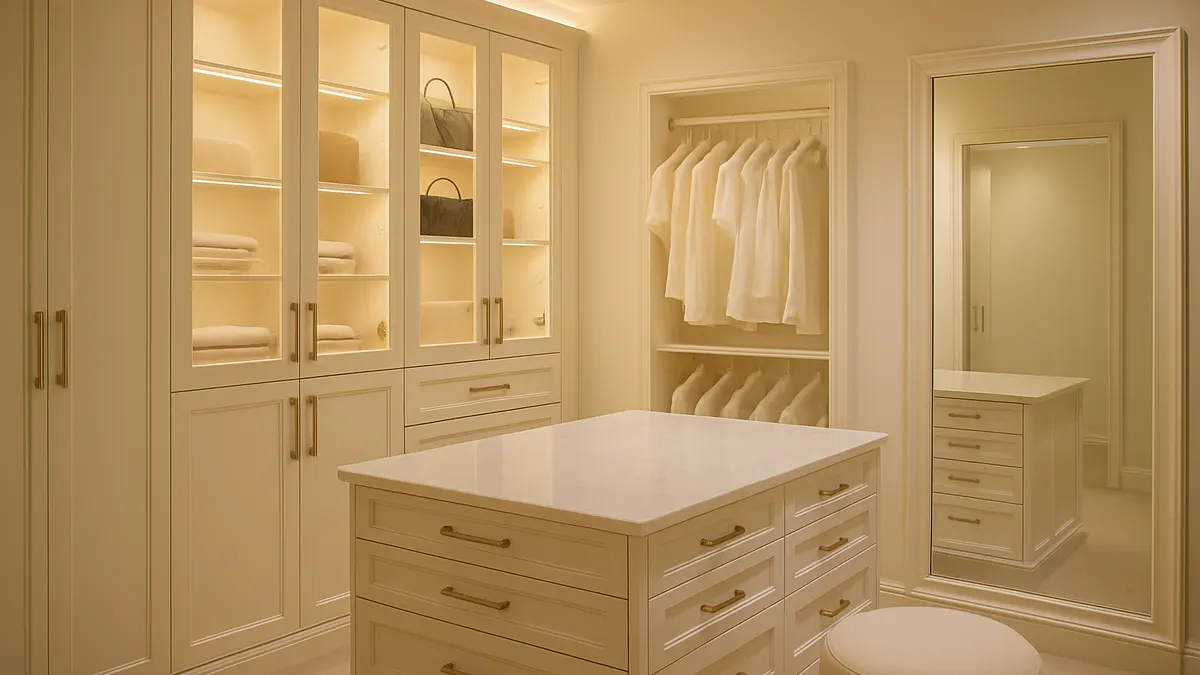
A well planned dressing room is more than a place to hang clothes. It can make getting ready faster, keep your wardrobe organized, and give your home a comfortable, luxury feel every day. Many homeowners assume a luxury dressing room needs a huge room or a big budget, but that is not really true. Smart storage, good lighting, the right materials, and a layout built around how you actually live can make a bigger difference than square footage alone. In this guide, we will walk through simple, practical dressing room design ideas any homeowner can use, whether you have a spare room to convert or just a corner of a bedroom to work with.
What Makes a Dressing Room Feel Luxurious?
A luxury dressing room is not defined by size or price. It comes down to a few elements working together: a clean, organized layout, since clutter is the fastest way to make any space feel cheap; high quality storage with dedicated spots for shoes, folded clothing, and accessories; good lighting; and elegant finishes with a large mirror for a polished look. Comfortable movement matters too. You should be able to walk in and get dressed without bumping into anything. Small personal touches, like a seat or a display shelf for jewelry, are what turn the room into something that feels like a private boutique rather than just another storage closet.
8 Dressing Room Design Ideas to Try at Home
1. Plan the Layout Around Your Wardrobe
Before choosing shelves or drawers, think about what you actually own. Long hanging clothes need more vertical space than folded sweaters, and shoes, bags, and jewelry each work best with their own zone rather than being piled together. Sort items you wear most often into easy reach spots, and move seasonal pieces higher up or further back. This is also a good moment to think about whether a custom wardrobe system suits your collection better than a standard one, since the right setup can make sorting and daily access much easier.
2. Add Custom Shelving and Drawers
Open shelving, drawers, cabinets, and hanging rods each serve a different purpose, so combining them usually works better than relying on one type alone. Drawers suit items you want hidden, while open shelving works for bags and sweaters you want to grab quickly. Custom shelving can also fit awkward corners or narrow wall space that standard systems often waste.
3. Create Dedicated Shoe and Accessory Storage
Shoes, handbags, belts, watches, and jewelry are often the biggest source of clutter simply because they lack one obvious home. Shoe shelves keep pairs visible, pull out drawers hide accessories while keeping them organized, and small compartments or display shelving work well for jewelry and belts. Once every item has a spot, the room feels calmer and easier to maintain.
4. Use Proper Dressing Room Lighting
Lighting does more work than most people expect. Ceiling lighting sets the overall tone, while LED strip lighting along shelves or inside drawers makes it easier to see what you own. Lighting near the mirror is especially useful for checking an outfit accurately. Good lighting is a simple upgrade that instantly makes a room feel more inviting and functional.
5. Add a Full Length Mirror and Vanity Area
A large mirror lets you see a full outfit at once instead of piecing it together from a small bathroom mirror. If space allows, a small vanity or dressing table adds another layer of function, giving you a proper spot for makeup, hair styling, jewelry, and daily grooming.
6. Use Vertical Space
When floor space is limited, going up is the answer. Tall cabinets, upper shelves, and double hanging rods let you maximize storage using vertical space without expanding the room’s footprint. Higher storage is a natural spot for seasonal items like winter coats, and using every inch of wall space gives the room a more finished, custom look.
7. Choose Materials and Finishes Carefully
Materials have a big impact on how luxurious a space feels. Warm wood finishes, quality shelving, and touches of glass add a sense of craftsmanship. Keep hardware finishes consistent throughout, and lean on neutral colors for a timeless look. Luxury is more about finishes that match and hold up over time than the most expensive option available.
8. Include Comfortable Personal Touches
Small additions make a dressing room feel personal instead of purely functional. A seating bench, a soft rug, a piece of artwork, or a bit of decorative lighting adds warmth. A display area for a favorite bag or watch collection lets the room reflect your own style, not just a generic storage plan.
How to Design a Small Luxury Dressing Room
A small space can still feel luxurious with the right approach. Vertical storage matters even more when floor space is tight, and shallow shelving can work well for folded items without eating into the walking area. Light colors help a small room feel open, and a well placed mirror adds the illusion of extra space. Keep walkways clear, since a cramped path is the fastest way to make a small room feel smaller. Multifunctional storage, like a bench that opens for storage, helps you do more with less, and reducing visual clutter with efficient lighting rounds out the plan.
How to Keep a Luxury Dressing Room Organized
Good design only pays off if the room stays organized day to day. Group similar clothing together so you are not hunting across the room for one item, and keep everyday pieces within easy reach. Use drawers for smaller accessories that tend to get lost, and store seasonal clothing separately so your everyday space stays uncluttered. Keep shoes in their designated spots rather than letting them pile up, and avoid overcrowding shelves, since a packed shelf is hard to use and hard to keep neat. Reviewing your wardrobe every few months and clearing out what you no longer wear keeps the system working as intended.
Custom Dressing Room vs. Standard Closet Storage
Standard closet storage can work fine for basic needs, especially with a simple wardrobe. A custom dressing room, on the other hand, is built around your room dimensions, wardrobe size, storage habits, and hanging requirements. If you have a large shoe collection, a lot of accessories, or a strong sense of personal style, customization lets you plan storage that matches how you actually live, rather than adjusting your habits to fit a generic setup. It really comes down to how much your needs differ from a standard layout.
Things to Consider Before Designing a Luxury Dressing Room
Before starting a project, think through the available room size and how many people will use the space. Consider the type of clothing you own, your storage requirements, lighting, budget, and preferred materials and finishes. It is also worth planning for future storage needs, not just what you own today, and making sure there is enough walking space and accessibility for daily use. Working through these details ahead of time helps prevent wasted space and storage that does not quite fit your routine once the project is finished.
Once you have a sense of what you need, the next step usually comes down to what goes on the walls. Good custom wood shelving can turn even an awkward corner into usable space, and it tends to hold up far better over time than basic wire or laminate options. Getting this part right early on makes the rest of the design come together a lot more smoothly.
If you’re near Yardley, Feasterville, Holland, Southampton, or Newtown, we’d love to help bring these ideas to life in your home.
FAQs
How do I make a dressing room look luxurious?
Focus on a clean layout, good lighting, and quality storage rather than size alone. A large mirror, matching finishes, and dedicated spots for shoes and accessories go a long way toward giving the room a polished, boutique like feel.
What should every luxury dressing room have?
At minimum, look for organized hanging space, drawers for smaller items, a full length mirror, and strong lighting. Beyond that, seating, a vanity area, and personal touches help round out the space.
How much space is needed for a home dressing room?
There is no fixed minimum. A closet, a spare room, or even a large bedroom corner can work well when the layout is planned around your actual wardrobe and daily routine.
What type of lighting is best for a dressing room?
A mix works best. Ceiling lighting covers the whole room, while LED strip lighting on shelves and near the mirror helps you see clothing colors and details accurately when getting ready.
How can I create a luxury dressing room in a small space?
Use vertical storage, light colors, and a well placed mirror to open up the room visually. Keep walkways clear and choose multifunctional pieces to make the most of a compact footprint.
Are custom closets worth considering for a dressing room?
If your wardrobe, shoe collection, or storage habits differ from a standard setup, custom closets can make better use of your space and reduce daily frustration compared to off the shelf storage.