
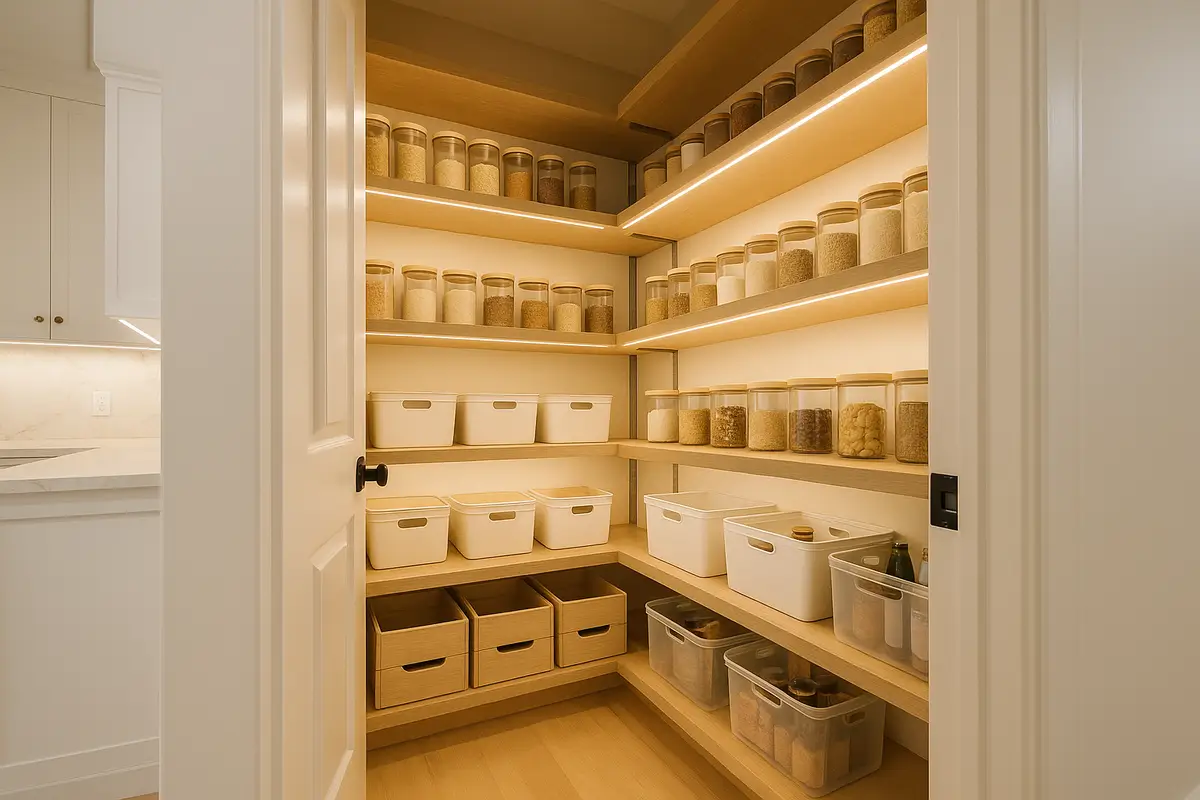
A well-organized pantry can change how you feel about cooking. When everything has a place, meal prep moves faster, grocery shopping gets easier, and the whole kitchen feels calmer. But a cluttered pantry — one where cans get buried, bags topple over, and you cannot remember what you actually own — creates the kind of daily friction that wears on you. The good news is that most pantry problems are solvable with the right layout, the right containers, and a little planning.
Whether you are working with a spacious walk-in pantry or a narrow reach-in closet off the kitchen, these 25 pantry organization ideas will help you make the most of every inch. Many of the same principles that work for smart home storage solutions apply directly to pantries too — purposeful zones, adjustable shelving, and storage tailored to what you actually own.
Start With the Right Shelving Foundation
1. Install Adjustable Shelves
Fixed shelves are the enemy of good pantry organization. Your needs change — bulk buys one month, tall cereal boxes the next. Adjustable shelving systems let you reconfigure the space whenever your storage needs shift, without a full renovation. If you want to see how this approach translates to other rooms, the guide on what to think through before designing any storage space lays out the planning process clearly.
2. Use Deep Shelves for Bulk Items
Reserve your deepest shelves for larger items like paper towels, jumbo cereal boxes, or water bottles. Keep everyday staples at eye level and on shallower shelves where they’re easy to grab without digging.
3. Add a Pull-Out Shelf or Drawer
Deep pantry shelves are notorious for swallowing items in the back. Pull-out shelves and drawer inserts bring the back of the shelf to you, so nothing gets forgotten or expired. This same idea — bringing everything within reach — is one of the principles behind creating better visibility in any enclosed storage space.
4. Consider Solid Wood Shelving for Durability
Wire shelving is popular, but it can tip small jars and lets things fall through. Solid wood shelving provides a stable, attractive surface that holds up beautifully over years of daily use. It also looks cleaner and is easier to wipe down. For tips on how shelving upgrades transform a space overall, the piece on what new shelving can do for an organized home is a great read.
5. Build Out Door Storage
The inside of a pantry door is often overlooked but extremely valuable. Over-the-door racks or custom-built door panels are perfect for spices, foil and wrap, snack bars, and other slim items that would otherwise clutter a shelf.
Use Containers and Labels to Create Order
6. Decant Dry Goods Into Clear Containers
Transfer pasta, rice, flour, sugar, oats, and other pantry staples from their original bags into airtight clear canisters. You can see exactly how much you have at a glance, and uniform containers stack neatly and use space efficiently.
7. Label Everything — Seriously, Everything
Labels keep your system running long after the initial organizing is done. Use a label maker, chalkboard labels, or even simple masking tape. Include the contents and, for decanted items, the expiration date. This single habit is what separates a pantry that stays tidy from one that falls apart within a week.
8. Group Like Items Together in Bins
Use baskets or bins to corral similar items: one bin for baking supplies, one for snacks, one for canned soups. This makes it easy to pull out an entire category when you need it instead of hunting across multiple shelves. The same logic behind keeping a household organized across shared spaces applies directly here — zones work because everyone knows where things belong.
9. Use Turntables for Corner Shelves
Lazy Susans are one of the easiest pantry upgrades you can make. Place them in corners or on shelves where items tend to get pushed to the back. A quick spin brings everything into reach, making them ideal for oils, vinegars, and condiments.
10. Invest in a Matching Container Set
Visual consistency creates a sense of calm. A matching set of containers — whether glass, acrylic, or bamboo-lidded — makes a pantry feel curated rather than chaotic, and it photographs beautifully if you ever plan to list your home.
Maximize Vertical Space
11. Stack Shelving Units for Taller Spaces
If your pantry ceiling is taller than your shelving, you’re leaving storage potential on the table. Custom-built pantry systems can be designed to reach all the way to the ceiling, using upper shelves for rarely accessed items and keeping daily essentials at a comfortable height. For a broader look at how custom storage adds real value to a home, this post on how personalized storage systems raise home value is worth a read.
12. Add a Step Stool to the Pantry
If you do use upper shelving, keep a small folding step stool nearby. A stool stored inside the pantry door means those high shelves are actually usable rather than just theoretical storage space.
13. Use Risers Within Shelves
Shelf risers or expandable organizers essentially double the storage on a single shelf by creating two tiers. They work especially well for canned goods, spice jars, or small condiment bottles.
14. Hang a Pegboard for Flexible Storage
A pegboard panel — mounted on an unused wall or inside the pantry — gives you infinitely customizable storage for frequently reached-for items like measuring cups, small baskets, and bag clips. You can rearrange hooks and shelves as your needs change, which is exactly the kind of flexibility that makes a storage system sustainable long-term.
15. Use the Floor for Heavy Storage
The pantry floor is ideal for heavy or bulky items: cases of water, large appliances you use occasionally, or a pull-out bin for potatoes and onions. Keep the floor tidy with a small rolling cart or dedicated baskets so nothing just gets piled up.
Organize by Zone for Faster Access
16. Create a Dedicated Breakfast Zone
Group cereals, oatmeal, granola bars, and breakfast staples together on one shelf. When mornings are hectic, knowing exactly where to go makes a real difference. This is precisely why a well-thought-out storage system changes the pace of your morning routine — whether it is the pantry, the closet, or both.
17. Designate a Kids’ Snack Shelf
Put healthy snacks within reach of children on a lower shelf. When kids can grab their own snack independently, it reduces interruptions during meal prep. Keep everything else — sweets, adult snacks — on higher shelves. For families juggling multiple people sharing the same household, storage systems designed around a family’s real daily habits make the biggest difference.
18. Build a Baking Station
Group all baking supplies — flour, sugar, baking powder, vanilla, chocolate chips — on one shelf or in one bin. When you’re ready to bake, everything comes out together rather than being pulled from four different shelves.
19. Keep a ‘Use First’ Zone
Designate a small area for items nearing expiration or leftovers from open packages. Check this zone first when planning meals to reduce food waste and keep pantry rotation moving efficiently.
20. Store Appliances in the Pantry When Possible
Countertop appliances you don’t use daily — a stand mixer, a waffle iron, a blender — can be stored in the pantry to free up kitchen counter space. A lower shelf with a small electrical outlet nearby makes this especially functional. It is one of those storage upgrades homeowners often wish they had planned earlier rather than retrofitting later.
Smart Specialty Storage Ideas
21. Use a Spice Rack or Drawer Insert
Spices are notoriously hard to keep organized. A tiered spice rack on a shelf, a mounted rack on the wall, or a pull-out spice drawer insert keeps everything visible and alphabetized so you can find cumin without upending the whole shelf.
22. Add a Wine or Beverage Rack
If your pantry has room, a built-in or freestanding wine rack keeps bottles organized and accessible. Alternatively, a section of shelving with horizontal slots works beautifully for bottles without taking up drawer or counter space.
23. Use Magazine Files for Foil, Wrap, and Bags
Slim magazine files — mounted on the inside of a door or placed on a shelf — are a surprisingly effective way to store aluminum foil, parchment paper, plastic wrap, and zip-lock bags upright and organized rather than jumbled in a drawer.
24. Store Bulk Items in the Right Containers
Large bulk purchases like flour sacks or jumbo-size snack bags don’t need to live in their original packaging. Transfer them to appropriately sized bins or airtight storage containers that stack neatly and protect against moisture and pests. Getting this right from the start is the kind of detail covered in a complete overview of closet and storage planning essentials.
25. Plan for Future Pantry Needs
As your household grows or your cooking habits evolve, your pantry will need to adapt. Building flexibility into your storage system — with modular, custom-designed shelving — means you can reorganize without starting from scratch. Think about what storage gaps you keep running into and design around them. If you are unsure where to start, reading about common mistakes people make when designing a storage system can help you avoid the most expensive missteps.
Tips for Maintaining Your Organized Pantry
The best pantry organization system is one you can realistically maintain. A few habits make all the difference:
- Do a quick reset once a week — spend five minutes putting things back in their zones.
- Practice “first in, first out” — new groceries go behind older ones so nothing expires unnoticed.
- Do a full purge every three to six months to clear expired items and reassess what is working.
- Involve everyone in the household so the system stays consistent.
For homeowners who want a pantry that is truly purpose-built — not just rearranged — a professionally designed built-in storage system can transform the space far beyond what off-the-shelf organizers can achieve. Many homeowners who renovated their kitchens later wished they had considered storage more carefully from the beginning. If you want to avoid that frustration, exploring your custom storage options early in the process is always the smarter move.
To see what a professionally organized pantry can look like, explore the pantry design gallery for inspiration tailored to real homes. You can also browse organizing ideas that translate across every room in your home for a broader perspective on creating spaces that stay clean and functional.
Serving Homeowners Across the Region
Closets Creation is proud to help homeowners throughout Bucks and Montgomery Counties create storage spaces they love living with — from kitchens and pantries to bedrooms and mudrooms. Our team works with families in Yardley, Southampton, Warminster, Holland, Richboro, and Newtown to design and install custom storage solutions built for real life. If your pantry could use a fresh start, reach out for a free consultation and let us show you what a truly organized kitchen storage space can look like.
To explore how we bring the same approach to every storage space in your home, take a look at how purposeful design elements help reduce clutter and support daily life — the same principles apply beautifully to pantry design.
Frequently Asked Questions
What is the best way to organize a small pantry?
The best approach for a small pantry is to maximize vertical space with adjustable shelves, use the inside of the door for slim items, and rely on clear bins to group and contain categories. Keeping only what you actively use in the pantry — and storing rarely used items elsewhere — also makes a small space feel much larger.
How do I keep my pantry organized long-term?
Consistency comes from building habits around your system. Label containers clearly, return items to their designated zones after use, and schedule a quick monthly check-in to remove expired products and reset shelves. A system that is easy to maintain is always better than one that looks perfect for a week and then falls apart.
What containers are best for pantry organization?
Clear, airtight containers — whether glass, BPA-free plastic, or acrylic — are ideal for dry goods because you can see what is inside without opening them. For grouping items, woven baskets or solid bins work well. The key is choosing containers that are stackable, easy to clean, and sized appropriately for what they will hold.
Is it worth investing in a custom pantry system?
For most homeowners, yes — especially if you find yourself constantly reorganizing or running out of space. A custom pantry or built-in storage system is designed specifically for how you cook and shop, which means it actually works the way you need it to. It also adds tangible value to a home when it comes time to sell.
How do I organize a pantry with deep shelves?
Deep shelves benefit most from pull-out drawers, tiered risers, and lazy Susans that bring items at the back within easy reach. Avoid stacking too many layers — if you can’t see what’s behind the first row, it effectively does not exist for your daily cooking.
Do I need a professional to organize my pantry?
You don’t always need a professional to organize your pantry, but when the space itself is the problem — wrong shelf heights, not enough depth, no door storage — no amount of reorganizing will solve it. That is when working with a professional storage designer makes sense. They can assess your space and build a solution that actually fits how you live.