
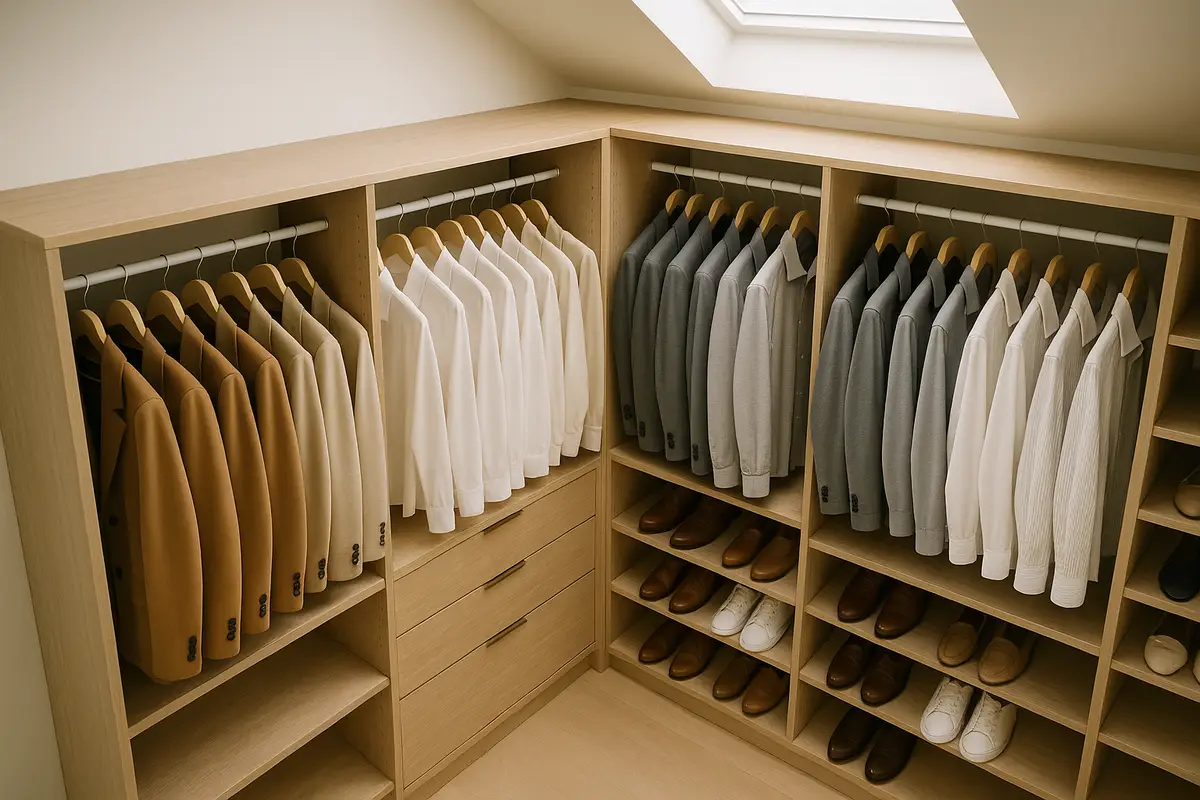
A disorganized closet is more than an eyesore — it costs you time every single morning. Whether you are hunting for a matching shoe or digging through a pile of sweaters to find that one shirt, clutter in your storage space adds unnecessary stress to your day. The good news is that 2026 has brought some of the most thoughtful and effective closet organization systems on the market, and this guide breaks them down so you can find the right fit for your home.
We ranked these systems based on functionality, durability, customization potential, and real-world performance. Whether you are outfitting a small reach-in or a spacious walk-in, you will find a solution on this list. If you are still figuring out where to begin, what to consider before designing a closet is an excellent place to start before committing to any specific system.
1. Custom Built-In Closet Systems
When experts talk about the gold standard in closet organization, custom built-in systems consistently come out on top. These are designed specifically for your space, your wardrobe, and your lifestyle. Unlike off-the-shelf kits, a built-in solution uses every inch of available wall space and can include a mix of hanging sections, drawers, shelving, and specialty storage for shoes, accessories, and more.
For homeowners in the Bucks County and Montgomery County area, investing in tailored closet shelving solutions is one of the best ways to turn even an awkward space into a fully functional wardrobe. Custom systems are especially effective in walk-in closets where maximizing vertical space matters most. If you want to understand the full range of options available, the ultimate guide to closets covers everything from design principles to material choices in detail.
Key advantages include:
- Fully tailored to your room dimensions
- Built with materials that match your home’s aesthetic
- Long-lasting and adds measurable real estate value
- Combines multiple storage types in one cohesive design
2. Modular Closet Shelving Systems
Modular systems offer a middle ground between fully custom and generic store-bought organizers. They come in standardized components — towers, shelves, hanging rods, and drawers — that you can combine in different configurations to suit your space.
These systems work particularly well for homeowners who want flexibility. You can start with a basic setup and expand over time as your needs evolve. How new shelving can transform your storage space is worth reading before choosing a modular system, since not all components are created equal.
Popular modular system features:
- Adjustable shelf heights to accommodate changing wardrobe needs
- Mix-and-match components from a consistent product line
- Available in wood, laminate, and metal finishes
- Can be installed as a DIY project or professionally fitted
3. Wood Closet Shelving Systems
Wood remains one of the most popular materials for closet storage, and for good reason. It is warm, durable, and visually appealing in ways that wire or laminate simply cannot replicate. In 2026, homeowners are gravitating toward natural wood finishes and solid hardwood components as part of a broader trend toward timeless, high-quality interior materials.
If you are considering a solid wood option for your home, exploring premium wood shelving installations can give you a clear sense of the craftsmanship and material options available. Wood shelving is particularly well-suited to walk-in closets and dressing areas where appearance matters as much as function.
Why wood shelving stands out:
- Stronger and more durable than wire or plastic alternatives
- Available in a range of stains and finishes
- Provides a high-end aesthetic that complements luxury interiors
- Can be refinished or updated rather than fully replaced
4. Reach-In Closet Organizers
Not every home has room for a walk-in, and that is perfectly fine. Reach-in closets are incredibly common in bedrooms, hallways, and guest rooms — and with the right organization system, they can hold a surprisingly large amount without feeling cramped.
The key to a well-organized reach-in is vertical planning. Double-hanging rods for shorter garments, pull-out drawers, and built-in shelf dividers can dramatically improve how much you fit into a standard closet opening. See how reach-in closet designs work in practice to understand just how much a smart layout can change your day-to-day routine.
- Double hang sections maximize space for folded shirts and jackets
- Door-mounted accessories add storage without using interior space
- Integrated lighting makes everything easier to find
- Slim drawer units replace bulky dressers in the bedroom
5. Walk-In Closet Systems with Specialty Zones
Walk-in closets have evolved far beyond a simple rod and shelf. Today’s best systems are designed around specialty zones — dedicated areas for shoes, jewelry, bags, seasonal storage, and even a makeup station. This zone-based approach makes getting ready faster and keeps your belongings in better condition over time.
Effective zoning starts at the design phase. Walk-in closet features that improve daily convenience go well beyond aesthetics — they directly shape how efficiently you move through your routine each morning. It is equally important to think about features that actively reduce clutter and keep things organized so your system stays functional over the long term, not just right after installation.
Popular walk-in closet zones in 2026:
- Shoe display shelving with angled or pull-out trays
- Accessory drawers with velvet-lined compartments
- Dedicated seasonal storage sections with labeled bins
- Built-in dressing area with mirror and seating — ideal for creating a personal styling space
- Custom makeup area integrated into the closet layout
6. Cedar Closet Systems for Long-Term Storage
Cedar is a time-tested material for closets, particularly for homeowners who store wool, cashmere, or other delicate natural fabrics. The natural oils in cedar wood repel moths and other insects, while the pleasant aroma keeps stored clothing smelling fresh without chemical sprays.
Cedar closet systems work especially well for seasonal clothing storage. Separating seasonal clothing efficiently in walk-in closets is much easier when you have a dedicated cedar section to store off-season items safely. Explore cedar closet design options to see how this material can be incorporated into a broader closet design.
- Natural moth-repelling properties protect delicate fabrics
- Aromatic wood keeps closets smelling clean naturally
- Works well as a dedicated section within a larger walk-in closet
- Can be combined with modern shelving hardware for a hybrid look
7. Wardrobe and Freestanding Closet Systems
Not every home has built-in closet space, and freestanding wardrobe systems fill that gap with style and practicality. Modern wardrobe systems have come a long way — they now offer sliding doors, internal lighting, adjustable interiors, and finishes that blend seamlessly with bedroom furniture.
Freestanding systems are an especially smart choice for renters, for rooms with awkward layouts, or for homeowners who want flexibility. Browse wardrobe design inspiration to see how a well-designed freestanding unit can look just as polished as a built-in.
What to Know Before You Start Designing
A great closet starts with honest planning. Before choosing a system, it helps to understand what commonly goes wrong. Mistakes to avoid when designing a custom closet system covers the most frequent missteps homeowners make — from underestimating hanging space to ignoring lighting entirely. Reading through these in advance can save you from a costly redesign later.
It is also worth asking yourself whether you need professional help. Whether a professional closet organizer is right for you depends on the complexity of your project, your timeline, and how much you want the final result to be truly tailored. For many homeowners, professional design pays for itself quickly in time saved and space gained.
If you prefer to get started with a framework before meeting with a designer, five key steps for designing a custom closet walks you through the process from measuring your space to selecting materials and finalizing a layout.
How to Choose the Right Closet Organization System for Your Home
With so many excellent options available, selecting the right system comes down to a few key questions:
- How much space do you have? Measure your closet dimensions carefully before committing to any system.
- What are you storing? A wardrobe heavy on hanging items needs more rod space; a shoe collection needs different solutions entirely.
- What is your budget? Custom built-ins are an investment, but they add home value. Modular systems are more affordable and still highly effective.
- Do you want to DIY or hire a professional? Professional installation ensures your system is perfectly fitted and structurally sound.
If you are still unsure, a consultation with a closet design professional can help clarify your needs and walk you through the available options. Custom-designed closet solutions are tailored from the very first conversation, ensuring you get a result that actually fits your life.
It is also worth knowing that a thoughtfully designed closet does more than just store your belongings — how custom closets add value to your home is a perspective worth considering if you are planning any kind of renovation or thinking about resale.
2026 Closet Organization Trends Worth Knowing
The closet industry has shifted significantly in recent years. Here are the trends experts are seeing most in 2026:
- Smart lighting integration — motion-activated LED strips are now a standard feature in high-end custom closets
- Sustainable materials — homeowners are choosing eco-certified wood and low-VOC finishes
- Open shelving sections — creating a boutique-style feel inside the closet
- Integrated charging stations for devices — a growing design request worth a dedicated article
- Dual-purpose storage — combining closet space with a home office nook or reading corner
Closet lighting, in particular, has become one of the most talked-about features in 2026. How closet lighting changes the feel and functionality of your space is a topic worth exploring in detail before you finalize your design plan. The right lighting setup can make a modest closet feel twice as large and a thousand times more usable.
Organization Systems for Small Spaces and Growing Families
Not everyone is working with a large master closet. Many homeowners need solutions for smaller bedrooms, shared spaces, or households with children and a lot to store.
For tighter footprints, narrow walk-in closet layout ideas that maximize space can be a revelation. The right layout makes even a slim closet feel organized and accessible. And for households managing multiple schedules, custom closet features designed for busy families can help keep shared storage from becoming a daily battle.
For smaller bedrooms specifically, how custom closets improve storage in small bedroom spaces outlines practical design approaches that work even when square footage is tight.
Children’s closets deserve special consideration too. How a new kids’ closet helps with room organization explores the specific challenges parents face and the storage configurations that hold up best as children grow. A well-planned kids’ closet can actually teach good habits from an early age.
A Better Closet Means a Better Morning
One of the most underappreciated benefits of a well-organized closet is the effect it has on your daily routine. How custom closets simplify morning routines for busy homeowners makes the case that a thoughtful storage layout is not a luxury — it is a practical tool that gives you back time every single day.
The same logic applies when you are getting ready for renovation. Storage features homeowners wish they had added earlier is a candid look at the additions that people regret skipping during past projects. Reading it before you start planning can help you avoid those same oversights.
And if you are aiming for better visibility inside a walk-in, smart design strategies for walk-in closet visibility offers practical layout and lighting advice that makes a genuine difference in how you use the space every day.
Do’s and Don’ts for Walk-In Closet Design
Whether you are designing a compact walk-in or a generously sized master closet, certain principles apply universally. The do’s and don’ts of small walk-in closet design covers the most important guidelines — from how to handle low ceilings to the best way to balance hanging space with shelving.
One of the most common mistakes is building a closet around your current wardrobe rather than designing for how you want to live. How to design your own closet system walks through the self-directed design process, helping you map out zones, calculate hanging footage, and think through the features you actually need before a single shelf goes up.
Lastly, before spending on new accessories or furniture, consider what an upgraded closet can do for the overall feel of your home. Beautifying your home with an upgraded closet illustrates how a well-executed storage system contributes to the look and livability of every room it touches.
Frequently Asked Questions (People Also Ask)
What is the best closet organization system in 2026?
The best system depends on your space and needs, but custom built-in closets consistently rank highest for functionality, durability, and long-term value. Modular systems are a close second for homeowners who want flexibility without a full renovation.
How much does a custom closet system cost?
Costs vary widely based on size, materials, and complexity. A basic reach-in custom system typically starts around $1,000–$2,500, while larger walk-in closet systems can range from $3,000 to $10,000 or more depending on finishes and features. Professional installation is usually included in quotes from full-service closet companies.
Is a walk-in closet worth the investment?
Yes — for most homeowners, a well-designed walk-in closet adds both daily convenience and measurable home value. Buyers consistently view walk-in closets as a desirable feature, and a professionally designed system can increase a home’s appeal significantly.
What materials are best for closet shelving?
Solid wood and high-quality wood composites are the most durable and visually appealing options. Melamine-coated particleboard is a more affordable alternative that still holds up well under normal use. Wire shelving is the most budget-friendly option but offers less flexibility and a less polished look.
How do I organize a small closet?
The key is to maximize vertical space. Use double-hanging rods for shorter garments, add shelf dividers, install door-mounted organizers, and use clear bins for folded items. A professional consultation can help you identify the best configuration for your specific dimensions.
How long does closet installation take?
Most custom closet installations are completed in one to two days. Larger or more complex systems may take longer. A reputable installer will give you a clear timeline during the consultation phase.
Serving Homeowners Across the Region
Closets Creation proudly designs and installs custom closet organization systems for homeowners throughout the surrounding communities. Our team works with clients in Yardley, Southampton, Warminster, Holland, Richboro, and Newtown, delivering tailored storage solutions that fit every home and lifestyle.
Whether you are starting from scratch or upgrading an existing system, we would love to help you design a closet you will actually enjoy using every day. Contact us to schedule a free consultation and take the first step toward a more organized home.